Monday, July 18, 2022

Tips to Avoid Extra Noise When Speaking in Public


To quote Matthew Kobach (@mkobach), "Twitter is a key that unlocks thousands of doors, some of which you never even knew existed." As a member of the Twitterverse for almost 13 years, I always enjoy meeting new people and learning from them. I recently connected with John Bowe and invited him to appear here on my Blog in a Q&A format to talk about public speaking. Highlights of our conversation follow a brief introduction.

Based in New York City, John Bowe is the award-winning author of I Have Something to Say: Mastering the Art of Public Speaking in an Age of Disconnection (Random House, August 2020). He is a speech and presentation consultant specializing in corporate and individual presentations; and has worked with entrepreneurs and executives from all over the world, as well as students, activists, and charity leaders. John contributes regularly to CNBC about public speaking and has written for The New Yorker, The New York Times Magazine, and GQ, among other magazines, and is the author, editor, and co-editor of numerous books. His work has been featured in the Harvard Business Review, The New York Times; and he has appeared on CNN, The Daily Show, with Jon Stewart, the BBC, and many others.

QUESTION: In your cover image on Twitter, you wrote, "I have something to say - mastering the art of public speaking in the age of disconnection." Can you please explain?
JOHN BOWE: While working as a journalist, not a speech or communications expert, I accidentally discovered that speech training accomplishes what many people seek through psychiatry, therapy and meds. It teaches people the mental and verbal techniques for connecting to others. It’s a simple technical skill, but it has a huge emotional payoff.

I followed my curiosity and discovered Toastmasters, which led me to the ancient Greeks and Romans who invented speech training. In their own pre-scientific way, they’d found this amazing way of educating people to interact and socialize better than we normally know how to do without training. The payoff was huge for individuals, but it also had a beneficial effect on society. Speech training became the core subject of higher learning for 2,000 years, the key skill for anyone planning to work in an organization. And now we don’t learn this stuff, and shockingly, people don’t know how to connect very well with one another. I put our lack of speech training at the root of modern speech anxiety, isolation, partisanship, lack of trust on every level, and it suddenly looks like a potential remedy for a lot of modern problems in America and everywhere else.

QUESTION: Why do you think most people fear public speaking?
JOHN BOWE: People fear public speaking for the same reason that they fear flying airplanes, because they’ve never been taught to do it. I think most of us ascribe it to some kind of mental or psychological problem. “I’m speech anxious.” “I’m shy.” The problem is me. It kills me that we don’t teach speech in school anymore. Ten hours of education, and I think at least half of all people would get over half their problems with public speaking. Once you see it as an art form that you can learn, it lifts a huge emotional burden. It’s actually relatively easy to learn.

QUESTION: What is the most common error that people make when speaking in public?
JOHN BOWE: People want to seem smart when speaking to a group. So when we get on stage, the Zoom call, the job interview, etc., we tend to rattle off a bunch of facts and data and slides and blah blah. And it’s boring. And disconnected. And the talk ends, and no one feels very good or enlightened or smart.

The best way to be smart in public speaking is to be clear, focused, brief, and relevant. It’s counter-intuitive for modern people, but thinking about who you’re talking to - and why - is the primary plane of focus. Facts come afterwards. It’s the easiest thing in the world to figure out, but it’s so obvious, most people can’t see it.

TWEET THIS: The best way to be smart in public speaking is to be clear, focused, brief, and relevant. ~@JohnFBowe #PublicSpeakingTips #DebbieLaskeysBlog


QUESTION: You wrote a post for CNBC entitled, "Avoid These 5 Types of Words and Phrases that Make You Sound 'Immature.'" Can you provide a recap?
JOHN BOWE: My definition of public speaking comes from Aristotle, so it’s weird by modern standards. Public speaking basically just means translating your thoughts from inside your brain to the world outside. Whether you’re talking about small talk or a TED talk, the same principles apply. It’s all about paying attention to your audience and their needs.

To a degree, the root of authority comes from being able to give people the information they need without constantly, unconsciously inserting yourself. And immaturity is kind of the opposite.

When you talk too much about yourself or water down your message with tics, you seem unprofessional. If you repeat stuff with your mouth that you’re already displaying on your slides, you’re wasting people’s bandwidth. When you use too many filler words like, “you know” or indulge yourself in too many unnecessary asides – same deal. Making apologies like, “Oh my god, this deck is such a mess. I’ve been so busy. My mother-in-law was visiting” – you’re just presuming someone wants to hear it in the middle of their busy day! Business jargon, “low-hanging fruit” and all the rest — it doesn’t make you look smarter; it makes you look pretentious.

So, as always, it really comes down to being able to give people what they need without a lot of extra noise.

(Read the full post here: https://www.cnbc.com/2022/02/14/avoid-these-words-and-phrases-that-make-you-sound-immature-says-speech-expert.html)

TWEET THIS: Give people what they need without a lot of extra noise. ~@JohnFBowe #PublicSpeakingTips #DebbieLaskeysBlog


QUESTION: Which three people alive today inspire you with their public speaking presence, word choice, and delivery?
JOHN BOWE: Dave Chappelle, Michelle Obama, and Oprah. This isn’t a racial commentary. I just don’t know of anyone else who comes close to them.

QUESTION: When I was in graduate school two decades ago, a guest speaker did something memorable. He taped a ten dollar bill to the wall at the front of the room. As people entered the room, their eyes were drawn to the money, and everyone wondered why the bill was on the wall. Once the speaker began his presentation, he explained that there was a typo in one of his slides, and the first person to catch the typo would get the ten dollars. Everyone paid attention to the presentation and read the slides. And one student got the ten dollars. What are some secrets you'd like to share?
JOHN BOWE: Visuals are powerful. People often remember them even if they forget the rest of a talk. But I think the only way to find those visuals is to focus on the basics first. If you really, really hone the purpose of your talk, whatever it is, and you organize your ideas really clearly, you’ll find great visual ways of demonstrating your ideas as you practice. I think the same is true for humor.

My thanks to John for sharing his public speaking insights and for appearing here on my Blog.

Image Credit: Giulia May via Unsplash.

Visit John's links:
Website: www.johnfbowe.com
Twitter: www.twitter.com/JohnFBowe
LinkedIn: www.linkedin.com/in/johnfbowe/

Monday, July 11, 2022

Do You Lead with the Greater Good As Your North Star?


To quote Matthew Kobach (@mkobach), "Twitter is a key that unlocks thousands of doors, some of which you never even knew existed." As a member of the Twitterverse for almost 13 years, I always enjoy meeting new people and learning from them. I recently connected with Cynthia Trevino and invited her to appear here on my Blog in a Q&A format. Highlights of our conversation follow a brief introduction.

Based in San Diego, California, Cynthia Trevino is a marketing mentor, content coach, recovering corporate staffer, small dog mom, self-published author of an Amazon #1 best seller, blogger, wife, evil stepmother, and espresso lover. She went from working 70-hour weeks as a marketing director for a Silicon Valley startup to, along with half the company, being unceremoniously laid off. As she explains, "Without a plan, (which I don’t recommend) I dove headlong into starting my own consulting company. Hey, it’s just like they say. Build the plane as you fly. After tons of bumps, fumbles, and hard-won lessons about marketing myself and enrolling clients, I became a happy, busy, self-employed consultant for small businesses and startups. [But] sadly, in 2018 I uncovered enraging statistics about the earnings gap between women and men entrepreneurs.The well-documented corporate America gender earnings gap, is alive and well amongst entrepreneurs. In just one study (Freshbooks), women business owners earned 28% less than men did for the exact same services. That was unwelcome news! [So] to do my part to level the playing field, I shifted from consulting to mentoring, teaching, and coaching women entrepreneurs so they can better market their businesses to ideal clients. At the time, I fervently wanted more women to close the entrepreneurial earnings gap. And that’s still my biggest mission today."

QUESTION: You wrote a post on your blog entitled, “9 Ways to Improve Your Blog Writing Skills (So You Can Engage Coaching Clients).” What were your three favorite ways, and why?

(Read the post here:
https://shemarketsmentor.com/improve-blog-writing-skills-so-you-can-engage-coaching-clients/)

CYNTHIA TREVINO: Here are my three favorite ways:
FIRST: Write the way you speak.

Here’s the deal, as a business owner, your primary goal when creating content is to engage dream clients, right? So remember, you’re not creating your blog post for Harvard Business Review, you’re writing to let dream clients know that you understand their pain. That you believe in them. That you know they can become the better people they want to be. Avoid writing your website pages, your blogs, or podcasts like you'd write a college term paper. The truth is, you want to be conversational when writing anything for future clients.

Pro Tip: To tap into your dream client's mindset, write as though she’s sitting across the table from you.

SECOND: Adopt the best copywriter's favorite rule: “The You Rule.”

The ability to talk with your dream clients in your written (or recorded) content is the holy grail. It means you’re re-creating what it’s like to have an in-person conversation with potential clients. In order to do that, be extra-intentional about using "you" in your content. That includes you, your, you’ll, you’re, yours, etc.

THIRD: Make your posts long enough so you can engage your readers.

Online marketing experts say that search engines prefer blog posts with at least 800 to 1200 words. Experts also say that posts with 2,000 words or more are shared most often.

It breaks my heart when coaches, looking to get their voice out, write super short blog posts (less than 500 words). What if the website visitor doesn't know you yet? Are you sharing enough in blog posts about who you are as a coach, so potential clients are fascinated to learn about your services? Will website visitors, blog readers, remember you after reading your post? Will blog readers be engaged enough to subscribe to your list?

No question, you can break the rules and write short content. After all, you’re the boss. As you decide which rules to break and which to follow, consider this: You want future clients to think this, after reading your blogs and website content: "Wow, she understands where I'm coming from. I love how she explained my problem. Wonder what her packages are like."

QUESTION: You wrote a book entitled, “She Markets.” What are three take-aways you hope readers have?
CYNTHIA TREVINO: I loved writing my book and followed the marketing advice I share with women entrepreneurs.

Take-away #1: Always create content as though you’re sitting at a table, having coffee with your dream client. Think of your dream clients as the North Star for your business. Develop your content, your marketing, your website, and your programs based on the problems your ideal clients want to solve. Imagine that she’s just poured out her heart to you about a huge struggle. What do you say? What baby steps can you share to give her hope? How do you share snippets of your expertise to guide her?

Take-away #2: Don’t leave marketing and content creation to chance. Put together a plan for creating your unique content, publishing it, and sharing it online.

Take-away #3, is a bit like the first one: You don’t have to become a marketing expert to bring in dream clients and grow your business. You only have to be the expert in who your dream clients are. Invest your energy in discovering what are your specific ideal clients’ fears, hopes, dreams, and challenges.

QUESTION: If you could dine with three women leaders - from history or business - who would they be, and why?
CYNTHIA TREVINO: Here are my three:
(1) Oprah Winfrey because she’s a trailblazer at starting amazing movements and businesses. And she does it all with empathy. Oprah is a powerful leader who is an incredible audience (community) builder. She knows where her community is going, what we’re going to be fascinated by next, and helps us make sense of the constant moral dilemmas that the fast-moving world dumps at our feet.

(2) Sarah Blakely, founder CEO of Spanx, not just because she’s on tons of “Most Powerful” lists, a philanthropist, a relentless supporter of startups founded by women, but because she was turned away by every hosiery company in North Carolina when she initially tried to introduce Spanx. Happily, she persisted.

(3) Tina Fey because she makes me laugh, and I'd like to have some humor added to the moment. She’s hugely talented as a performer, author, writer, and a producer/entrepreneur, so she’s developed the business side as well.

QUESTION: When President Obama introduced Janet Yellen as the new Federal Reserve Chair in October 2013, he said, "Janet Yellen is a proven leader who knows how to build consensus, the kind of person who makes everybody around her better." President Biden celebrated this when he nominated her as the first woman Secretary of the Treasury, and today, she serves as the 78th Secretary of the Treasury. What three characteristics do you think are necessary to create a consensus-builder?
CYNTHIA TREVINO: The truth is, our community, our country, and our economy needs every last consensus-builder we can get. Three characteristics necessary to create a consensus-builder are:

(1) Listening skills must be their top superpower. Everyone at the table deserves to have their voices not only heard, but taken into account as organizations explore potential approaches and execute the optimal solution.

(2) Empathy. My hope is that we all tap into our abilities to infuse empathy in our lives, government entities, and businesses. That means spending time “walking” in our customers, clients, constituencies, and family’s shoes. And as Scott Cook, the founder of Intuit, famously said, “First we must take off our own shoes.”

(3) Leadership that prioritizes both listening and empathy. Consensus-builders must have the kind of leadership that sets aside our own egos and self interests and places the greater good above all else. I love women and men who behave and lead with the greater good as their North Star.

QUESTION: What is your favorite quote from former Supreme Court Justice Ruth Bader Ginsburg, and why?
CYNTHIA TREVINO: My favorite Ruth Bader Ginsburg quote is one that I’m going to paraphrase because I can't recall it exactly. It was I believe when she was arguing a case in front of the Supreme Court.

The Ginsburg quote is this: “He’s never been a 13-year-old girl.”

The context was when a male justice had asked a decidedly non-empathetic question.

My backstory for this quote is that when he posed the question, the patriarchal, male justice did not for one split second, consider the impacts to the victim. He simply could not/would not put himself in another’s shoes, even for a moment. Not even in a child’s shoes.

(Read the details about this case from 2009:
https://www.washingtonpost.com/education/2020/09/25/ruth-bader-ginsburg-case-13-year-old-girl-strip-searched-school/)

QUESTION: One of my favorite leadership quotes is from author and consultant Mark Herbert (@NewParadigmer on Twitter): “Leadership doesn't require you to be the smartest person in the room. It requires you to block and tackle for others.” What does this quote mean to you?
CYNTHIA TREVINO: This quote highlights the need for empathy, again. Blocking and tackling for others means to me that, as leaders in every situation, we owe it to everyone to be on alert for times when under-served people need us to hold space for them. Or when the people who aren't in the room, still need their rights, needs, and interests considered when decisions are made for an organization of any kind.

Blocking and tackling for others particularly applies in public sector situations where those with entrenched power rush to preserve the status quo, because it benefits them.

As leaders in ALL sectors of our society, the under-served need us to create space for their viewpoints to be heard. We must constantly create space for their problems to be acknowledged and a fair hearing for the ongoing issues of women, children, and People of Color to be elevated to a level where they can be solved. I wish schools and colleges taught blocking and tackling leadership skills!

TWEET THIS: As leaders, the under-served need us to create space for their viewpoints to be heard. ~@ConnectUrGenius #LeadershipTip #DebbieLaskeysBlog


My thanks to Cynthia for sharing her inspiring leadership and equality insights and for appearing here on my Blog.

Image Credit: Shutterstock.

Check out Cynthia's links:

Blog: https://shemarketsmentor.com/blog
LinkedIn: https://www.linkedin.com/in/cynthiatrevino/
Facebook: https://www.facebook.com/CynthiaTrevinoMentor/
Instagram: https://www.instagram.com/cynthiamentor/
Twitter: https://twitter.com/ConnectUrGenius  
Book: https://shemarketsmentor.com/she-markets-book/

Monday, July 4, 2022

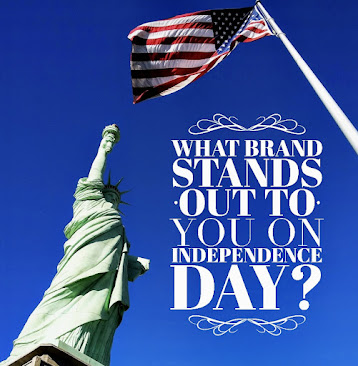
What Brand Stands Out to You on Independence Day?

What brands come to mind that symbolize or embody Independence Day?

Here are some brands featuring the word “American” that you might recognize: American Airlines, American Broadcasting Company (ABC), American Eagle Outfitters, American Express, American Fireworks, American Freight, American Greetings Corporation, and Bank of America.

There is no doubt that these brands can, and do, celebrate more brand awareness during the days leading up to July Fourth as well as on the day of the annual holiday itself.

They may align their logo, email messaging, social media posts, and/or advertising with the red, white, and blue colors of the American flag. They may also include some form of “independence” theme in a tagline or logo. But they should never lose sight of the competitive positioning that they’ve worked hard to achieve over the years.

Does your brand’s name align with a national park or national monument? If yes, then your brand has a head start on brand awareness. Consider the effective branding if your brand name happens to be Mount Rushmore Cement Company or Yellowstone Coffee or Liberty Bell Music Store.

In all of these scenarios, the first goal of all marketing campaigns has been achieved: There is immediate brand recognition.

However, remember, the buzz of the moment should NEVER overshadow your core brand promise, brand story, and mission.

So what brand stands out to YOU on Independence Day? Please chime in and share.


Image Credit: Swapnil Bhagwat via Unsplash.

Friday, July 1, 2022

Lead, Inspire, and Continue to Evolve


To quote Matthew Kobach (@mkobach), "Twitter is a key that unlocks thousands of doors, some of which you never even knew existed." As a member of the Twitterverse for almost 13 years, I always enjoy meeting new people and learning from them. I recently connected with Nathalie Gregg on Twitter and participated in one of her inspiring TweetChats. She interviewed me about leadership and the employee experience - what an honor! To return the favor, I have invited Nathalie to appear here on my blog in a Q&A. Highlights of our conversation follow a brief introduction.

Based in South Carolina, Nathalie Gregg is a Change Agent, Enterprise Leadership Strategist, Adjunct Professor, and Speaker. She empowers women to become their own economic engines. Online, she is a digital superstar and is the founder of the #LeadLoudly movement and Twitter Chat, where she inspires women to be bold, confident, and fearless to drive real results.

QUESTION: What attracts you to the discipline of leadership?
NATHALIE GREGG: I am attracted to the discipline of leadership because it begins with the drive to lead yourself before you lead others. It is about envisioning what could be and continuing to ask what if.

TWEET THIS: Leadership begins with the drive to lead yourself before you lead others. ~@NathalieGregg #LeadershipTip #DebbieLaskeysBlog


QUESTION: What advice would you give to new leaders?
NATHALIE GREGG: Here are three:
(1) You must have a vision. You must know were you are going.
(2) You must have courage. You must be committed to do the hard things well.
(3) You must have a community. You must bring a team! You can’t do it alone!

QUESTION: You host a weekly TweetChat on Twitter using the hashtag #LeadLoudly. What are a few take-aways you hope participants have at the end of each week's chat?
NATHALIE GREGG: The #LeadLoudly Twitter Chat is a mini masterclass to accelerate growth and community. My community has the opportunity to learn and leverage cutting-edge information and resources to growth their businesses as well as their brands. Our international guests serve as mentors, sponsors, and allies to build robust collaborations and strategic partnerships.

QUESTION: You are a passionate advocate for women leaders. Who are some women leaders (from history or business) that provide inspiration to you?
NATHALIE GREGG: I am always inspired by women who decide to #LeadLoudly! They have decided to be bold, confident, and fearless. They are visionaries and innovators who drive change - realizing that no is NOT an option. The only option is to move forward.

That said, my inspiration comes from Margaret Thatcher, Rosa Parks, Amelia Earhart, Ruth Handler (Barbie creator), and Frances Hesselbein (former Girl Scouts CEO).

QUESTION: One of my favorite leadership quotes is from author and consultant Mark Herbert (@NewParadigmer on Twitter): "Leadership doesn't require you to be the smartest person in the room. It requires you to block and tackle for others." What does this quote mean to you?
NATHALIE GREGG: An inspirational leader must have knowledge of personal mastery while possessing these four critical skills: visioning, influencing, implementing, and executing. Leadership is a continual process of inspiration and transformation from the inside out!

TWEET THIS: Leadership is a continual process of inspiration and transformation from the inside out! ~@NathalieGregg #LeadershipTip #DebbieLaskeysBlog


My thanks to Nathalie for sharing her leadership insights and for appearing here on my Blog.


Image Credit: Pawel Czerwinski via Unsplash.


If you missed the #LeadLoudly chat hosted by @NathalieGregg featuring Debbie Laskey on January 27, 2022, here's the link for all the Tweets:
https://wakelet.com/wake/cnlKF4y3TFK-hLrnKGQgS

Monday, June 20, 2022

A Tale of Marketing, Storytelling, and Community


To quote Matthew Kobach (@mkobach), "Twitter is a key that unlocks thousands of doors, some of which you never even knew existed." As a member of the Twitterverse for almost 13 years, I always enjoy meeting new people and learning from them. I recently connected with Christine Johnson and invited her to appear here on my Blog in a Q&A format. Highlights of our conversation follow a brief introduction.

Based in Vancouver, Canada, Christine is a strategist who helps young marketers get comfortable promoting themselves by creating marketing portfolios that supercharge their careers. As a marketing leader, she's rebranded companies, launched new SaaS products, written sales copy, and developed long-term strategies. She loves sharing insights that help people open new doors and showcase who they are.  

QUESTION: In your pinned Tweet on Twitter, you provide a great thread of nine things to include in a marketing portfolio. Can you provide a quick recap?

(Check out the full thread on Twitter: https://twitter.com/CJ_250marketing/status/1348785605430296576)

CHRISTINE JOHNSON: In 2015, I met someone during a layover at an airport and was offered a job at a marketing agency because I had a marketing portfolio published/ready to go. Early in my career, building my portfolio was really difficult because I didn't know how to position myself or my accomplishments. There were no guides to help me navigate. Flash forward a few years/career moves, and I'm now confident on what I need to showcase for clients to want to hire me.

In early 2021 (with an audience of 500-ish), I shared a Twitter thread with tips on what to include in a marketing portfolio and realized that other people are struggling with the same problems I struggled with (this thread has been viewed 250k+ times). I want to be able to offer them support/guidance on how to create a great portfolio to make it easier to land an interview and find new clients because this is an industry-wide problem that both hiring managers and celebrities struggle with.
    
We're all taught to keep a win folder, but no one is really taught WHY they need to continue to build their portfolio. I see this as an industry gap and want to help change things so that it's easier for people to find their next opportunity.

QUESTION: What exactly is a WIN FOLDER?
CHRISTINE JOHNSON: A win folder is where you keep emails or snippets of work that showcase success from your projects. This could be a nice accolade from a client or someone in a different department. Or, it could be a screenshot of analytics data that shows what kind of results you generated (page views from Google analytics, click-through data from Twitter analytics, etc.). It's nice if you have something visual, but it doesn't necessarily have to be a piece of creative such as a graphic, video, poster, etc.

You want to keep this current and continue to look for things to add to it over time (you're trying to showcase your own growth.) Having this info on hand can help leverage new positions or brighten a bad day.
    
To create a folder for your wins, start by going through your inbox and message history (anywhere you can find notes/feedback on your work), and take screenshots. Write down any compliments you remember. Go back and look through projects you are proud of. It can feel a bit intimidating to get start,ed but once you get going, it's a fun project that pushes you to reflect and think more about where you'd like to go.

QUESTION: What's your favorite aspect of marketing?
CHRISTINE JOHNSON: My favorite aspect of marketing is storytelling. I love finding new ways to capture people's interests and showcase their passions.

QUESTION: What three marketing books should every marketer read, and why?
CHRISTINE JOHNSON: Here are three:

(1) Contagious: Why Things Catch On by Wharton marketing professor Jonah Berger: There's something about the storytelling that really draws me to this book over and over again. I loved reading about the restaurant in New York called 'Please Don't Tell.' I can't bring myself to find out just how much their secret location was rumor or real for customers, because I like the whimsy of the whole thing.

(2) Marketing Outrageously by Jon Spoelstra: This book was recently recommended to me by Brett Rudy (@BKRUDY on Twitter). The lessons are both memorable and simple. I'm not a sports marketing guy, but I can't stop thinking about how the author gave out jock straps as part of a guerilla marketing campaign and the way he shaped sports marketing in general. The lessons are great for any and all types of marketers. Even the packaging of the book stands out. I mean, how can you forget the cover when you see a sumo wrestler slam dunking a basketball mid jump?!

(3) Junior: Writing Your Way Ahead In Advertising by Thomas Kemeny: This is a copywriting book that is one part story, one part lesson, and (if you're brave enough), one part writing exercise. It pushed me to rethink how I approach writing.

QUESTION: What's your fave marketing buzzword or term, and why?
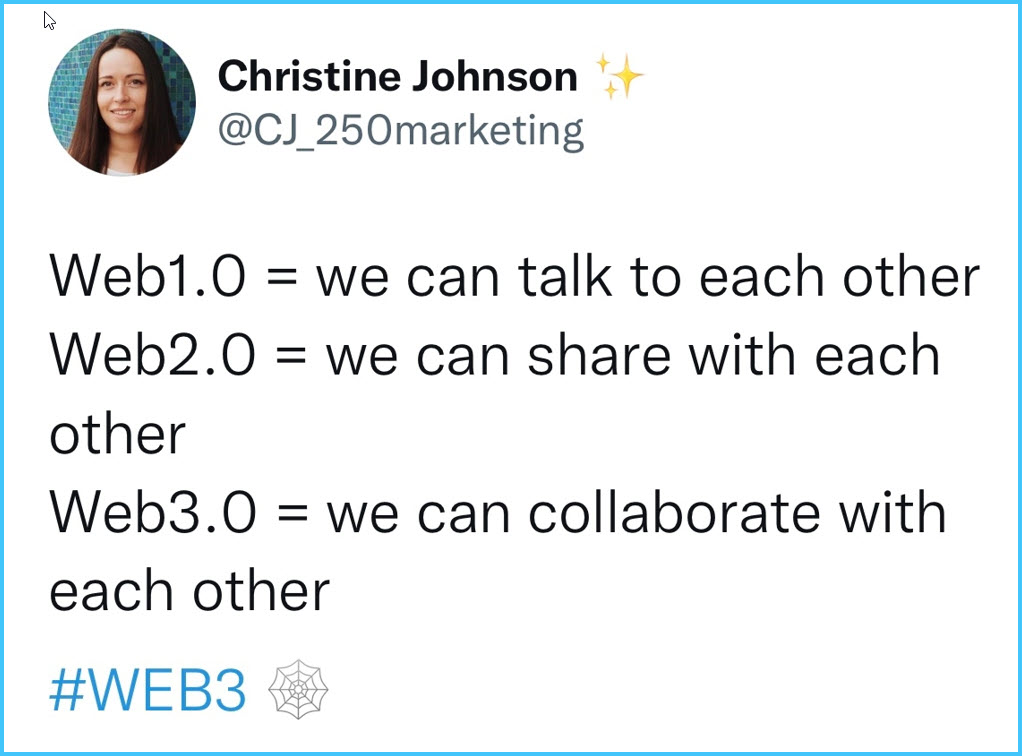
CHRISTINE JOHNSON: Community. It feels like we're moving in the right direction by focusing on community and how to bring people together around a common problem/goal. The olden days of marketing, where everything was exaggerated or gimmicky, seem to be falling behind us (thankfully). I still like guerilla marketing campaigns that capture your attention, but can see that focusing on the audience and how to build a community is what will have more impact long term. The Internet is evolving (some are calling it WEB3) and that means our expectations are getting higher for when and how information is delivered to us as consumers.

TWEET THIS: Focusing on the audience and how to build a community is what will have more impact long term. ~@CJ_250marketing #MarketingTip #DebbieLaskeysBlog

QUESTION: What's THE marketing buzzword or term that annoys you the most, and why?
CHRISTINE JOHNSON: Growth hack. There are no shortcuts. You have to do the work.

QUESTION: Who do you admire in the marketing arena, and why?
CHRISTINE JOHNSON: Seth Godin is a great writer and I admire that he's consistently putting out daily blog posts; and Christina Garnett revived a hashtag on Twitter, and over the past year, has helped me learn about the value of community (and how that can shape your entire marketing strategy).

My thanks to Christine for sharing her marketing insights and for appearing here on my Blog.

Image Credits: Debbie Laskey and Twitter.

Check out Christine's links:
Article referenced in first question:
https://www.linkedin.com/pulse/complete-guide-getting-your-first-remote-job-christine-johnson-bba/
Twitter: https://twitter.com/CJ_250marketing
LinkedIn: https://www.linkedin.com/in/christine-johnson-/
Website: http://250marketing.ca/

Monday, June 13, 2022

The Best Leaders Remove Roadblocks

To quote Matthew Kobach (@mkobach), "Twitter is a key that unlocks thousands of doors, some of which you never even knew existed." As a member of the Twitterverse for nearly 13 years, I always enjoy meeting new people and learning from them. I recently connected with Michelle Gibbings from Melbourne, Australia, and invited her to appear here on my Blog in a Q&A format. Highlights of our conversation follow a brief introduction.

Michelle Gibbings is the workplace expert. Internationally recognized, she is the award-winning author of three books and is welcomed on stages globally to help inspire leaders, teams, and organizations to create successful workplaces. Her mantra is simple: help people thrive, and progress is accelerated. Visit her website (www.michellegibbings.com) and connect on LinkedIn (www.linkedin.com/in/michellegibbings), Instagram (@michellegibbings), and on Twitter @michellegibbing.

QUESTION: You wrote a book entitled, "Bad Boss, What to Do If You Work for One, Manage One or Are One." According to the book's description, "Regardless of your role – be it an employee, a boss or leader, the boss's boss or a leader of leaders – this award-winning book encourages you to play your part. It challenges you to examine your role in the dynamic and to own what you CAN do to make relationships work." What are the three most important take-aways from the book?
MICHELLE GIBBINGS: We've all worked for a bad boss and perhaps, at times, been a bad boss. Consequently, your approach to the situation depends on your role – be it employee, boss or boss' boss. Whatever your role, the book encourages you to critically examine the context, challenge your perspective, and outline what you can do to shift the situation.

Firstly, you assess what is going on, your impact, and the potential cause. Next, you consider the options given the circumstances and your role in the relationship. After that, you implement your approach while living your values and ensuring you take care of your well-being. In the final phase, you reflect on your progress (or lack, thereof) and determine any next steps, especially if it's not going according to plan.

QUESTION: Years ago, one of my bosses told me that I should "lower my expectations" regarding the work product completed by one of the employees I supervised. How would you have responded?
MICHELLE GIBBINGS: Context matters, so it's never a simple answer. There are many variables to consider. I would want to understand your team member's level of experience, capability to do the role, and aptitude to learn. Is their performance a competency or capability gap, or is it behavioral? How much time has been devoted to upskilling, and how long have they been in the role? It's also essential to challenge yourself regarding the expectations you set on performance and outcomes based on the level of resourcing in the team, other priorities and workload pressures.

All of this doesn't mean you set the bar low for your team, but it does mean you are realistic about what's possible given the context in which the team members are working. If there's a gap between your expectations and your boss' expectations about performance, I would want to understand why. If they are downgrading their expectations, what's driving that shift, and what does that mean for the team's overall performance and objectives? So, I would start by getting curious and asking lots of questions.

QUESTION: What is the most memorable thing you've learned from a boss, and how has that lesson shaped your career?
MICHELLE GIBBINGS: I've been fortunate to have worked with some fantastic leaders throughout my career. One of the best bosses from early in my corporate career said to me one day: "Michelle, I get that you're ambitious and that you want to do a good job. The work's important, but no one will remember the work you did when you move on. The only thing they'll remember is how you made them feel."

Those comments shifted my focus. The more I connected with my team, the more I understood them and their needs, and vice versa. Our working relationship improved; we got more done as a team and were collectively more successful because I put them first. It was a reminder that being a great leader takes work, but above all else, it takes a desire to want to do better.

TWEET THIS: Being a great leader takes work, but above all else, it takes a desire to want to do better. ~@michellegibbing #LeadershipTip #DebbieLaskeysBlog


QUESTION: Which leaders (from history or business) inspire you, and why?
MICHELLE GIBBINGS: I am an avid history buff, so it's challenging to narrow down to three because there is so much we learn from seeing how leaders of the past have confronted challenges and embraced opportunities. What I am often reminded of when I read biographies and autobiographies is the complexity of humans. Leaders are not one-dimensional, and some of the character traits that made them successful in a specific context also meant they were difficult to work for in a different context. On a practical level, the leaders who have most inspired me and most changed how I lead are the leaders I worked with during my career.

QUESTION: One of my favorite leadership quotes is from author and consultant Mark Herbert (@NewParadigmer on Twitter): "Leadership doesn't require you to be the smartest person in the room. It requires you to block and tackle for others." What does that message mean to you?
MICHELLE GIBBINGS: I often say, "If you think you're the smartest person in the room, you need to find another room." My comment is about encouraging leaders to accept they don't hold the licence on being right, and it's essential to recognise the impact their positional power has on how they make decisions. While I get the intent behind the concept of 'blocking or tackling', I find the language problematic because it has undercurrents of an adversarial approach to relationship building. For me, the best leaders help their team members navigate organizational challenges and remove roadblocks. They play a crucial role in assisting their understanding of organizational power structures and help them determine the best approach to building relationships with challenging stakeholders.

TWEET THIS: The best leaders help their team members navigate organizational challenges and remove roadblocks. ~@michellegibbing #LeadershipTip #DebbieLaskeysBlog


My gratitude to Michelle for sharing her inspiring leadership insights and for appearing here on my Blog.

Image Credit: Pixabay via Wordswag.

Wednesday, June 8, 2022

My Amazing Dinner Party of 15


With Queen Elizabeth II’s unique accomplishment of a 70-year reign and the Platinum Jubilee celebrations now a part of history, I wondered what it would be like to enjoy afternoon tea with Her Royal Highness. Then I began wondering about having dinner with her, which led me to think about the question some ask during an interview, “If you could dine with five people, who would you choose, and why?” Upon much thought, my dinner table would include 15 seats plus me, so here are the 15 people in my dinner party.

Queen Elizabeth II: No words are really needed as to why she would be a guest at my table, but I would definitely ask her about all the Prime Ministers she has worked with – especially Winston Churchill and Margaret Thatcher. I would also ask her about her many international travels and ask which was her favorite trip during her 70-year reign.

Bertie Green: Born in the 1870’s, my great-grandmother passed away 16 years before I was born, but my middle name was given to me in her memory. In an era when women remained in the background, she was a passionate supporter for women’s equality, who, in the early years of the 20th century, fought for women’s suffrage. She met with groups of women and advocated for women’s right to vote.

Sandra Day O’Connor: As the first female Supreme Court Justice, O’Connor is a hero in the fight for equality for women. She graduated in the top ten percent in her law school class at Stanford University but was unable to be hired for any law firm job due to her gender. She found employment as a deputy county attorney in San Mateo, California, after she agreed to work for no salary and no office and shared space with a secretary. I was lucky to see her in person in a Q&A many years after she retired, but the ability to speak with her about her experiences on a one-on-one basis would be priceless.

Ruth Bader Ginsburg: As the second female Supreme Court Justice, Ginsburg was an inspiring advocate for women’s equality. While her politics were diametrically opposed to Justice O’Connor’s, the two demonstrated how two people with different perspectives could work together harmoniously. Later in life, Ginsburg became a cultural icon known simply by her initials, RBG, yet her ability to inspire never wavered.

Susan B. Anthony:
According to the National Women’s History Museum, “Champion of temperance, abolition, the rights of labor, and equal pay for equal work, Susan Brownell Anthony became one of the most visible leaders of the women’s suffrage movement. Along with Elizabeth Cady Stanton, she traveled around the country delivering speeches in favor of women’s suffrage…In 1872, she was arrested for voting. She was fined $100 for her “crime.” This made many people angry and brought national attention to the suffrage movement.” I would ask her to talk about her inspiration for the amazing work she did.

Eleanor Roosevelt: While she was the longest-serving first lady of the United States during her husband Franklin Roosevelt’s four terms, she was also a diplomat (appointed by President Truman to the United Nations). Beginning in 1936, she wrote a daily syndicated newspaper column called “My Day.” She was a sought-after speaker and advocated for child welfare, housing reform, and equal rights for women and racial minorities. I would ask her to talk about her inspiration for the amazing work she did.

Jackie Robinson: Since I come from a family of Dodgers fans (both Brooklyn and Los Angeles), Robinson is known as a hero for his baseball abilities as well as his off-field personality and composure. He was the first black player in major league baseball and, while the Dodgers family supported him in the late 1940’s, others in the baseball world did not. I would ask him about how the world of baseball changed from 1947 to when he retired in 1956 – as well as his thoughts about the annual Jackie Robinson Day, when all major league baseball players celebrate the date of his debut every April 15.

Shirley Chisholm: I have always held Chisholm in high regard. She was the first black woman elected to the U.S. Congress and represented New York's 12th Congressional District for seven terms from 1969 to 1983. Her quote, “If they don’t give you a seat at the table, bring a folding chair,” has been front and center in my life as I have taken risks, “leaned in” as Sheryl Sandberg suggests, and given 110 percent. There have been times when the risks paid off as well as times when they have not – and I would discuss both with her.

Hillary Clinton: As the first female presidential candidate for a major American political party, Clinton’s experience cannot and will not be repeated. She set the stage for all who follow – and for the woman who eventually becomes the first woman president. Since much of her experiences were documented in her book entitled, What Happened, I would ask her to pick any highlights she wished to share. My questions would follow.

Meryl Streep: Her film career has spanned decades and shows no sign of slowing down. From her depiction of a divorced mom in “Kramer vs. Kramer” to a mother with an impossible choice in “Sophie’s Choice” to a terrible boss in “The Devil Wears Prada” to famous suffragette Emmeline Pankhurst in “Suffragette,” Streep has demonstrated why she’s the actress every director wants. I would want to discuss these roles and more and ask which she’s enjoyed most.

Eero Saarinen: A fan of architecture, I would want to discuss some of Saarinen’s most unique works, such as, the Gateway Arch in St. Louis, the TWA Terminal at JFK Airport in New York, and Dulles Airport in Washington, D.C. Saarinen’s life was cut much too short, so he did not see everything he designed come to fruition, but I would want to discuss his entire body of work with him.

Claude Monet: A fan of art, and especially Impressionist art, I would want to compliment Monet on his collection of art. I would tell him that I visited his home in Giverny in the rain but could almost see him there painting. I would also tell him that I visited many museums in France to see his work. I would want to discuss his technique and favorite pieces with him.

Barry Manilow: This singer-songwriter and entertainer has been around for decades. Sitting at a piano, he would add some music to the dinner party – all tunes that everyone would recognize and possibly sing along to. I’d want to discuss his favorite songs with him.

Lucille Ball: One of the first female comedians to make her mark in Hollywood, Lucille Ball has become an icon. Her sense of timing was flawless, and she never cared who got the laugh, as long as the audience laughed. Her show “I Love Lucy” has become timeless, as have many storylines from the show. I’d want to discuss her thoughts when the episodes featuring the little chicks and burning nose were filmed before LIVE audiences - and many more.

Walt Disney: Developer of the modern American theme park, Walt Disney branded family entertainment in a way that no one before or after has improved upon. When you walk through the entrance of a Disney park, you have a special feeling of happiness that you experience nowhere else. Sure, there are numerous other Disney creations, such as, animated cartoons, movies, retail stores, clothing, etc., but it is the theme parks that most people associate with Walt Disney. I’d want to discuss the evolution of the theme parks with him.

Would you want to be a waiter, chef, or sommelier at my dinner party? Who would you choose to dine with if you could choose anyone from history or the modern era?


Image Credit: Haley Lawrence via Unsplash.