Showing posts with label customer service. Show all posts

Tuesday, October 6, 2026

A Tale of Customer Data, Email Marketing, and Fast Food


Do you know what's happening this week in the world of business? It's Customer Service Week, which means that organizations should make the extra effort to acknowledge the importance of customer service and its impact on profits. With that objective in mind, I'd like to share a recent customer experience.

I received an email from a doctor's office. The email served as confirmation for an upcoming appointment. While I definitely prefer an email confirmation rather than an intrusive phone call or text, this email stood out due to its poor customer service.

The email included the date and time for my upcoming appointment but also included the following sentence: "If this is your first visit, make sure to arrive 15 minutes early to fill out new patient paperwork."

Since I'm a long-time patient, and this upcoming appointment will probably be my tenth visit, that sentence should not have been included in the email.

The inclusion of that sentence made me wonder why the doctor's office doesn't have two different versions of its email appointment confirmations. Would it be too difficult to send one version without that sentence to existing patients?

In today's era of data overload, the doctor's office has my name, address, date of birth, insurance information, dates of previous appointments, and my medical records. So, when sending an email confirmation, it would have been simple to remove the sentence about "first visit/new patient paperwork."

According to RestaurantDive, "The problem isn't that you don't have data. It's that none of it connects."

And according to Joe Rospars, Founder and CEO of Blue State Digital, "Big data is about having an understanding of what your relationship is with the people who are most important to you - and an awareness of the potential in that relationship."

Lastly, here's an excellent example of looking at customer data and then taking action. Juan Castro of West for Elavon shared an analogy from the early days of fast food: "Chains used to sell burgers, fries, and sodas separately, until the data showed that customers were buying all three nearly every time. The combo meal is a business improvement from that observation."

SHARE THIS: The problem isn't that you don't have data. It's that none of it connects. ~RestaurantDive #CX #CustomerServiceWeek #BrandExperience #DebbieLaskeysBlog

Image Credit: Vecteezy/Shohor Ali.

Tuesday, August 12, 2025

A Tale of Two Radically Different Customer Experiences


When we think of customer service, we think of quality products, polite customer service agents, and reasonable prices. We definitely don't think about products that fall apart the moment they arrive at our homes via delivery, rude representatives by phone, email, or in person, or exorbitantly high prices.

This is a tale of two radically different customer experiences.

The front door of my house had recently been re-painted, so I wanted to purchase a new wreath to hang on the door. Since the selection was always more extensive on Etsy, I thought it would be nice to search on that site and also support its small business owners. Little did I know what a mistake that was! I purchased a green wreath that, from the photos, looked like it was a quality product that would look nice on my front door. 

However, the box arrived damaged, and upon opening the box, I noticed that at least a dozen pieces had fallen off of the wreath and were unable to be re-attached. I had to return the wreath to the seller.

Upon contacting the seller, I was told that there were no returns and no refunds. I was speechless. The item was damaged. That was simply bad business. And the wreath had cost $125. After a few more back and forth messages, the seller agreed to refund my money IF - and only if - I returned the damaged wreath.

I went to my local UPS store and post office and nearly fainted. The cost to ship the wreath was $60. That was half the price of the wreath. That must have meant the seller had paid pennies to make the wreath so that she would make money on the sale. Anyhow, since I wanted some money back, I had to pay $60 to ship the wreath.

Once I received my refund, I researched the name of the CEO of Etsy and other members of his C-Suite and sent them an email message explaining my experience. I got no response from the CEO. But I did get an email letting me know that a $5 coupon would be available in my account. Wow, a big $5. 

Since I was out $60 and then given a coupon for $5, I was still out $55. No one at Etsy wanted to make me whole, meaning that I would have to spend more money on Etsy to use the coupon. The customer service reps who emailed me a couple of times informed me that they had no authority to refund more than $5. Had I been the CEO (who earns $16 million a year, by the way), or anyone who works for him, I would have purchased a $50 gift card and sent it to me. What happened to out-of-the-box thinking?

So, now, let's turn our attention to how a different brand dealt with a recent experience. I had purchased eight soup bowls from Mikasa. When they arrived at my house, one was slightly damaged. So I contacted the customer service email address and asked if they would replace the defective bowl. 

I immediately received an email: "Hi Debbie! Thanks for reaching out. We feel terrible that a bowl in your order was defective, and we're happy to replace it for you without delay. Here's your replacement order number and tracking number, it should arrive in 7-10 days. Also, don't worry about sending back the damaged merchandise, and feel free to keep any extras in the replacements we send you. Thanks for choosing Mikasa, and have a great day! Sincerely, Mikasa Customer Service."

And you know what? The package from Mikasa contained four - YES FOUR - new bowls.

Which brand understands customer experience marketing, the customer journey, and walking a mile in the customer's shoes? Which of these two brands would you choose to do business with?

I've asked Shep Hyken, customer experience expert and author to chime in about the importance of positive customer experiences in the past, and one of his previous quotes is just as timely now as when it first appeared here on my blog back in April, "Great service isn't complicated – some of the basics include respect, professionalism, and follow-through."

And lastly, let's always remember my two favorite quotes on this topic:

SHARE THIS: Your most unhappy customers are your greatest source of learning. ~Bill Gates #CX #BrandExperience #DebbieLaskeysBlog


SHARE THIS: There is only one boss - the customer. And he can fire everybody in the company from the chairman on down, simply by spending his money elsewhere. ~Sam Walton #CX #BrandExperience #DebbieLaskeysBlog


Image Credits: Etsy and Mikasa.

Saturday, July 5, 2025

When it comes to customer experiences, one brand always saves the day!


Today is an important date in the world of e-commerce because on this date in 1994, Jeff Bezos launched Amazon. Initially created as an online bookseller, it has evolved into an online marketplace where almost anything can be found and purchased, sometimes earning the nickname "the disrupter of industries" according Entrepreneur magazine and, in the process over the years, also earning the nickname "The Everything Store" by The New York Times. This post serves as a birthday greeting to Amazon!

According to Wikipedia, "The company, originally named Cadabra, was founded in the converted garage of Bezos' house and was renamed to Amazon in November 1994. Bezos chose the Seattle area for its abundance of technical talent from Microsoft and the University of Washington, as well as its smaller population for sales tax purposes and the proximity to a major book distribution warehouse in Roseburg, Oregon. The Amazon website launched for public sales on July 16, 1995, and initially sourced its books directly from wholesalers and publishers. Amazon went public in May 1997. It began selling music and videos in 1998, and began international operations by acquiring online sellers of books in the United Kingdom and Germany. In 1999, it initiated the sale of a diverse range of products, including music, video games, consumer electronics, home improvement items, software, games, and toys."

Recently, I received an email from a well-known jewelry brand, a brand that has become even more widely known due to its latest brand spokesperson, Ariana Grande, who has become a mega-star due to the international success of WICKED, THE MOVIE (parts one and two). In the email, there were several nice jewelry items with links to the products on the brand's website. I visited the website to take a look and then decided to visit a local store to try several items on in person. 

Once I arrived at the local store, I saw two salespeople and two other customers - so the store was definitely not busy. Once one customer left, I asked the available salesperson for assistance because she did not approach me - and she did not welcome me to the store either. I showed her the items I was interested in trying on, and she checked inventory on her handheld device. She told me that there were no bracelets or necklaces in stock at her store. Note, I had checked the website prior to my in-store visit and learned that the store had the items in stock. While shaking my head, I asked to see some other items and showed the salesperson the email I had received, and again, she said the items were not in stock at her store. I thanked her and left.

What did I do upon returning home and booting up my computer? If you guessed "logged into Amazon," you'd be correct. I immediately logged into my Amazon account and searched for the desired item, the Gema Bracelet Mixed cuts, Multicolored, Rhodium plated from Swarovski - surprisingly at a lower price than from the store - and purchased it. I also learned that there were other items in the Gema Crystal Collection that had not been advertised by the brand, either in-store on online. 

As a result of this purchase from Amazon and not from Swarovski, I started to think about how completely different the two customer experience journeys were. According to customer experience expert and author Annette Franz, "A journey map is a visual story-capturing/storytelling exercise during which you paint the picture of the customer experience for a specific interaction by walking in the customers' shoes to capture their steps, needs, and perceptions of the interaction. Journey mapping is a creative process that allows you to understand – and then redesign – the customer experience. The output is not just a "pretty picture" once the map is developed, it is meant to be a catalyst for change."

Therefore, if this famous jewelry brand wishes to keep customers so that they purchase directly from them rather than sending customers elsewhere, it would behoove them to improve their customer journey mapping process.

To quote Zen Yinger, who shared her thoughts about Amazon on my blog during my Spring Leadership Series last year: "What sets Amazon apart is not just the convenience it offers, but the unwavering dedication to customer satisfaction...In essence, Amazon isn't just a company; it's a symbol of customer-centric leadership, innovation, inclusivity, adaptability, and responsibility. It represents the evolution of an industry leader that not only meets - but anticipates - the needs of a dynamic and interconnected world."

And lastly, let's return to a quote from Annette Franz that appeared here on my blog in 2016, "You need to ensure that you deliver a great experience at all stages of the customer lifecycle." Seems like there are a lot of take-away lessons for Swarovski from my recent experience, because according to Bill Gates, "Your most unhappy customers are your greatest source of learning."


SHARE THIS: We see our customers as invited guests to a party, and we are the hosts. It's our job every day to make every important aspect of the customer experience a little bit better. ~Jeff Bezos #CustomerExperience #DebbieLaskeysBlog


Image Credits: Swarovski and Amazon.


Check out Annette's newest book, Employee Understanding:

https://cx-journey.com/employee-understanding


Read SPRING LEADERSHIP SERIES – Featuring Zen Yinger (June 2024):

https://www.debbielaskeysblog.com/2024/06/spring-leadership-series-featuring-zen.html


Read An Amazing Amazon Experience – But It Didn't Start That Way (January 2018):

https://www.debbielaskeysblog.com/2018/01/an-amazing-amazon-experience-but-it.html


Read Customer Service Is Not Something to Drive Around (June 2016):

https://www.debbielaskeysblog.com/2016/06/customer-service-is-not-something-to.html 

Saturday, April 26, 2025

Customer Experiences and Garage Cabinets


Recently, I had three customer experiences, and they couldn't have been more different. Pull up a chair and join me on a recap through customer experience hell. But first, did you know that Garage Condos created "National Garage Day" five years ago to be celebrated on April 26th? According to National Archives, "After the traditional promotion of spring cleaning, National Garage Day is intended to promote and encourage a favorable attitude toward productivity as it pertains to one's organization and use of their garage. Since a garage is the place where many pursue hobbies, build projects, clean and store collectibles as well as entertain, a day of recognition seems fitting."

I wanted to spruce up my garage, in other words, clean out all the useless stuff that has accumulated over the years, such as, brooms, paint cans, holiday wreaths, and a myriad of other stuff that is so dirty that I have no idea what it is. But after cleaning out the garage, I realized that the stuff I wanted to keep could go into cabinets and stay hidden. And then, voila, I would have a beautiful garage for my cars!

But first, I needed some estimates from cabinet companies. So, I did my online research (thanks, Google!) and set up on-site visits with three local companies.

The first company's rep arrived in an unmarked car. No, not undercover police, but no promotional signage on the car. Okay, I thought, but what about a business card? I asked for one, and the lady said she had none. Strike two. Then, after showing a picture of my ideas for the garage cabinets and discussing size and color, the lady said she would need about 30 minutes to check her cost sheets and several binders of papers, and nearly 90 minutes later, she showed me her estimate. She said her company was having a 50 percent off discount until the end of the month, so her point was that I would need to move quickly to take advantage of the discount. Then, she showed me her estimate for the cabinets. When I said that the cost seemed high, she asked if she should call her boss to ask for another discount. I was speechless because I was not going to barter back and forth. I said thanks (strike three), and she left.

Despite calling to inform me, the second company's rep arrived 30 minutes late. She also arrived in a nondescript car without any promotional signage, and she also said she did not have a business card. She looked at my photo idea for the garage cabinets and then said she would get back to me with her design ideas and an estimate.

Neither company's rep sent an email to thank me for my time. Neither company's rep told me when I would receive a written estimate. 

Then, I met with the third company's rep who was actually the company's owner, Cary Llewelyn of Premier Garage of Sherman Oaks. He provided his business card. He offered to provide references for me to call, as well as the link to his online reviews and Instagram profile. He mentioned that a neighbor had used his services and offered to set up a visit so that I could see his work in person. He answered questions on site, and BEFORE LEAVING MY HOUSE, set up a Zoom meeting (that would feature a 3-D model of his ideas) for a specific day and a specific time to review and discuss his design and estimate.

Two days later, I finally heard back from the first two companies. The first company's rep called me and asked if I had decided to move forward with her company, and I asked her "Where is the written estimate?" She responded, "It is against our company's policy to provide written estimates." WOW.

The second company's rep sent an email 48 hours after meeting with me, but by then, this should come as no surprise, I had decided to move forward with the third company. Her supervisor actually called me when I completed her company's survey, which, by the way, should never have been sent so closely in time as the estimate (what if I had any questions?). I explained all the negative aspects of the visit, and at least, the supervisor agreed that the employee should have provided a business card.

So, what can we learn from these interactions?


(1) Customer experience marketing may be a C-Suite topic, but that doesn't mean that it always travels downward to the people on the frontlines (aka, salespeople).


(2) Some brands simply don't care about positive customer experiences.


(3) Consistency is not important when it comes to all customer touchpoints.

I shared these experiences with customer experience expert and author Shep Hyken (@hyken on Twitter/X), who has graciously appeared on my blog many times. He said, "Great service isn't complicated – some of the basics include respect, professionalism, and follow-through. The third company nailed it. They took control of the process, set expectations, and properly followed up. The other two? They over-promised and under-delivered, eroded credibility and trust, and disrespected your time. Who would you rather do business with? (That's a rhetorical question.) Any business that needs customers – and that's all of us – should recognize the basics of customer service, which should be common sense, but unfortunately, as you can tell from the description of the first two companies, is not so common."

On a final note, around 7pm on the evening that the first two reps visited my garage, there was a delivery of beautiful flowers at my front door. For a fleeting moment, I thought one of the cabinet vendors had sent the flowers with a message that read, "Thank you for your time today. I hope my company can earn your business." But alas, it was not meant to be...the flowers had been delivered to me by mistake – they were for my neighbor.


Image Credit: Motor City Garages.

Monday, November 21, 2022

Brands Must ALWAYS Listen to Customers!


As a member of the Twitterverse for 13 years, I always enjoy meeting new people and learning from them. To quote Matthew Kobach (@mkobach), "Twitter is a key that unlocks thousands of doors, some of which you never even knew existed." Recently, I connected with Jeremy Watkin from San Diego, California, and invited him to appear here on my Blog in a Q&A discussion about customer service and customer experience marketing. Highlights of our conversation follow a brief introduction.

Jeremy Watkin is Director of Customer Experience and Support at NumberBarn and cofounder of the CustomerServiceLife blog. He has more than 20 years of experience as a customer service and contact center professional leading high-performing teams. He has been recognized as a thought leader for his writing and speaking on a variety of topics including quality management, outsourcing, customer experience, contact center technology, CCaaS (Contact Center as a Service), product marketing, social media, and more. When not working, he can be found spending quality time with his wife Alicia and their three boys, running with his dog, or dreaming of native trout rising for a size 16 elk hair caddis.

QUESTION: You wrote a very interesting post on your blog entitled, “Striking the Right Balance as a Customer Service Leader.” Can you provide brief highlights?

(Read the post here: https://customerservicelife.com/striking-the-right-balance-as-a-customer-service-leader)

JEREMY WATKIN: This was a fun article to write. In it, I compare and contrast the leadership styles of General George Armstrong Custer and General Ulysses S. Grant. Custer was loved by his troops because he was there with them, fighting on the front lines.

By contrast, Grant was removed from the front lines, constantly focused on strategy and looking at the bigger picture. Personally, I tend to be more of a Custer than a Grant when it comes to work in the contact center. And we know that for all of his successes, Custer is most remembered for his Last Stand — a failure that led to his death.

I can remember a conversation with a boss many years ago. I was frustrated because I constantly helped on the front lines in our contact center, but we never seemed to get ahead. I felt like it was my responsibility as the manager to be there for my team.

My boss helped me understand that I was doing my team a disservice by not thinking about the big picture and making a plan for our team to more efficiently serve customers. Since that time, I’ve worked to strike a healthy balance between Custer and Grant leadership styles in my work. Have I achieved perfection? NO! But, I improve a little more each day.

QUESTION: There are so many terms and abbreviations in the customer service and customer experience arena. Which do you like, and why? And which annoy you, and why?
JEREMY WATKIN: There sure are a lot of terms, abbreviations, and acronyms in the customer experience arena — and it gets even worse when you work in the telecom space. From a customer service standpoint, I hate any insider term or acronym that isn’t well defined, requiring my customers to decode messages.

As far as specific terms go, “customer experience” ranks pretty high on my list of favorite and least favorite terms. I love customer experience, or CX, as a means of uniting a company around a customer-centric mission. I get annoyed, however when customer experience is used as a buzz word but doesn’t make any material difference in the way we treat our customers. And the annoyance continues when we start rebranding our customer service teams as “customer experience teams.” Customer service is but one small piece of a customer’s entire experience with your company.

We must be intentional about how we speak of customer experience, otherwise it’s just lip service.

TWEET THIS: We must be intentional about how we speak of customer experience, otherwise it’s just lip service. ~@jtwatkin #CX #DebbieLaskeysBlog


QUESTION: Dennis Snow (@DennisSnow on Twitter) wrote, "A customer-focused culture is one in which everything is designed with the “lens of the customer” in mind." What does this quote mean to you?
JEREMY WATKIN: What a fantastic quote! As someone who routinely interacts with customers, there’s no better way to see through the lens of the customer than to hear their voice. How do we listen to customers? Some ways include reading and listening to their interactions with customer support, speaking with them directly, and paying close attention to their responses on customer satisfaction surveys. Once you become attuned to what customers are saying, thinking, and feeling, you will make great strides toward a more customer-focused culture.

And by the way, this is an ongoing process and must stay that way. The moment you think you’re customer-focused and you no longer need to listen to customers, you’re headed for trouble.

TWEET THIS: The moment you think you’re customer-focused and you no longer need to listen to customers, you’re headed for trouble. ~@jtwatkin #CX #DebbieLaskeysBlog


QUESTION: Those of us who live in the marketing and customer experience worlds have heard the Jeff Bezos empty chair story many times. What does this mean to you?

(Read the post here: https://www.inc.com/john-koetsier/why-every-amazon-meeting-has-at-least-one-empty-chair.html)

JEREMY WATKIN: Admittedly, I don’t think I’ve ever left a chair empty during a meeting to represent the customer and their viewpoint. But I definitely think it’s a wonderful sentiment and reminder to always consider how our actions impact our customers.

Lately I’ve been spending time improving our self-service options and have even dabbled in chatbots. Self-service is a wonderful opportunity to help customers find accurate solutions to their issues without having to wait for a human response — and this is a terrific area of focus. But, the moment we introduce self-service options with the chief goal of making it more difficult for customers to contact support and driving down support costs, we’ve at least partly missed the point. If the customer was in the room, they would tell us the same thing.

QUESTION: What three brands stand out as experts in customer experience marketing, and why?
JEREMY WATKIN: I definitely follow a lot of different brands, but there are three that immediately come to mind:
 
(1) SafeSplash Swim School (https://www.safesplash.com/) offers swimming lessons across the United States using the swimming pools at health clubs. We originally found SafeSplash during the pandemic when there was absolutely no other option for swimming lessons for our children. On their website, they state, “We are committed to making every lesson the start of a lifetime love of the water.” As I witness the pure joy from the instructors as my kids reach new milestones in swimming, I am convinced that SafeSplash believes wholeheartedly in their mission.

(2) In full disclosure, I’ve never stayed at a Ritz Carlton but I have read Excellence Wins by Horst Schulze (https://customerservicelife.com/5-favorite-quotes-from-excellence-wins-by-horst-schulze/), former President of the Ritz Carlton Company. In the book, Schulze shares his 24 service standards which are regularly discussed and lived out by every member of the organization. This standard of excellence has been instrumental in building the Ritz Carlton into the customer experience legend that they are today.

(3) Being a lover of camping, hiking, and fly fishing, I absolutely love Patagonia. I have several of their products, with my puffy jacket, backpack, and fishing hat being among my favorites. I’d own more if not for the higher cost of their products. The cost is, however, justified, because their products are made to last and created with sustainability in mind. I tested this philosophy last year when a buckle broke on my backpack, and their friendly support team sent me the perfect replacement part. I’ve used that backpack for 8 years and fully intend to use it for many more. Patagonia is proof that many customers are willing to pay more for excellent service and exemplary quality.  

QUESTION: What is your favorite customer service story?
JEREMY WATKIN: I want to give a huge shout out to my local True Value Hardware store. On one particular occasion, I was headed out of town on a trip to the Grand Canyon and needed to get some hardware to build a DIY bike rack for my tent trailer.

Immediately, when I walked into the store, a helpful employee asked, “Is there anything I can help you find today?” Having a pretty good idea of what I needed, I said “No thanks” and headed back to the hardware section — you know, the area of the store with all of the nuts and bolts.

After lingering in that section for a bit, the employee checked in with me to see how it was going. It was at that point that I explained my vision for this bike rack. He proceeded to find the perfect combination of eye bolts, nuts, and lock washers and even explained why certain washers would be better than others for my particular application.

Why do I mention a trip to the local hardware store? Unlike those big box home improvement warehouses, I know that every time I go to True Value, the employees are consistently available and exceedingly helpful. Though I might pay a bit more for their products, the expert help almost always ensures that I walk out of that store with exactly what I need.

Shep Hyken (@hyken on Twitter) defines Amazing Customer Service as being consistently above average every time. Since hearing that quote, I’ve learned to value those companies that achieve this level of consistency, and True Value is a shining example.


My thanks to Jeremy for sharing his customer experience insights and for appearing here on my Blog.

Image Credit: Patrick Fore via Unsplash.

Connect with Jeremy at these links:
Blog: www.CustomerServiceLife.com
Twitter: https://twitter.com/jtwatkin
LinkedIn: https://www.linkedin.com/in/jtwatkin

Wednesday, September 28, 2022

Are You a Customer Advocate?

 
To quote Matthew Kobach (@mkobach), "Twitter is a key that unlocks thousands of doors, some of which you never even knew existed." As a member of the Twitterverse for 13 years, I always enjoy meeting new people and learning from them. I recently connected with David Beaumont from Ohio and invited him to appear here on my Blog in a Q&A format. Highlights of our conversation about customer experience marketing and management follow a brief introduction.

Known for delivering outstanding customer support to clients, David Beaumont is a knowledge seeker and results driven visionary who builds relationships with clients and peers by aiding the end-user through training and development tasks. David is a qualified support professional, HDI Certified, and holds a Bachelor of Science in Business Administration, Finance from The Ohio State University. He has more than 15 years of experience in customer service, equality/diversity/inclusion (EDI), and client support.

QUESTION: In your Twitter bio, you state "Be your customer's advocate." What led to that statement?

DAVID BEAUMONT: I heard the words, "Customer service is dead." At that time, I thought to myself, "Is it really?" Then I thought, what if I could bring awareness and attention to some customer service mistakes that I see and share some insight on what could make customer service better? I also thought all customer service is not bad, but it may need a bit of fine-tuning. So, I figured I'd create a blog and talk about it. That is how Customer Service is Real came about.

TWEET THIS: All customer service is not bad, but it may need a bit of fine-tuning. ~@dbeaumont266 #CX #DebbieLaskeysBlog


QUESTION: How can businesses teach employees that they are the front-line to customer happiness?

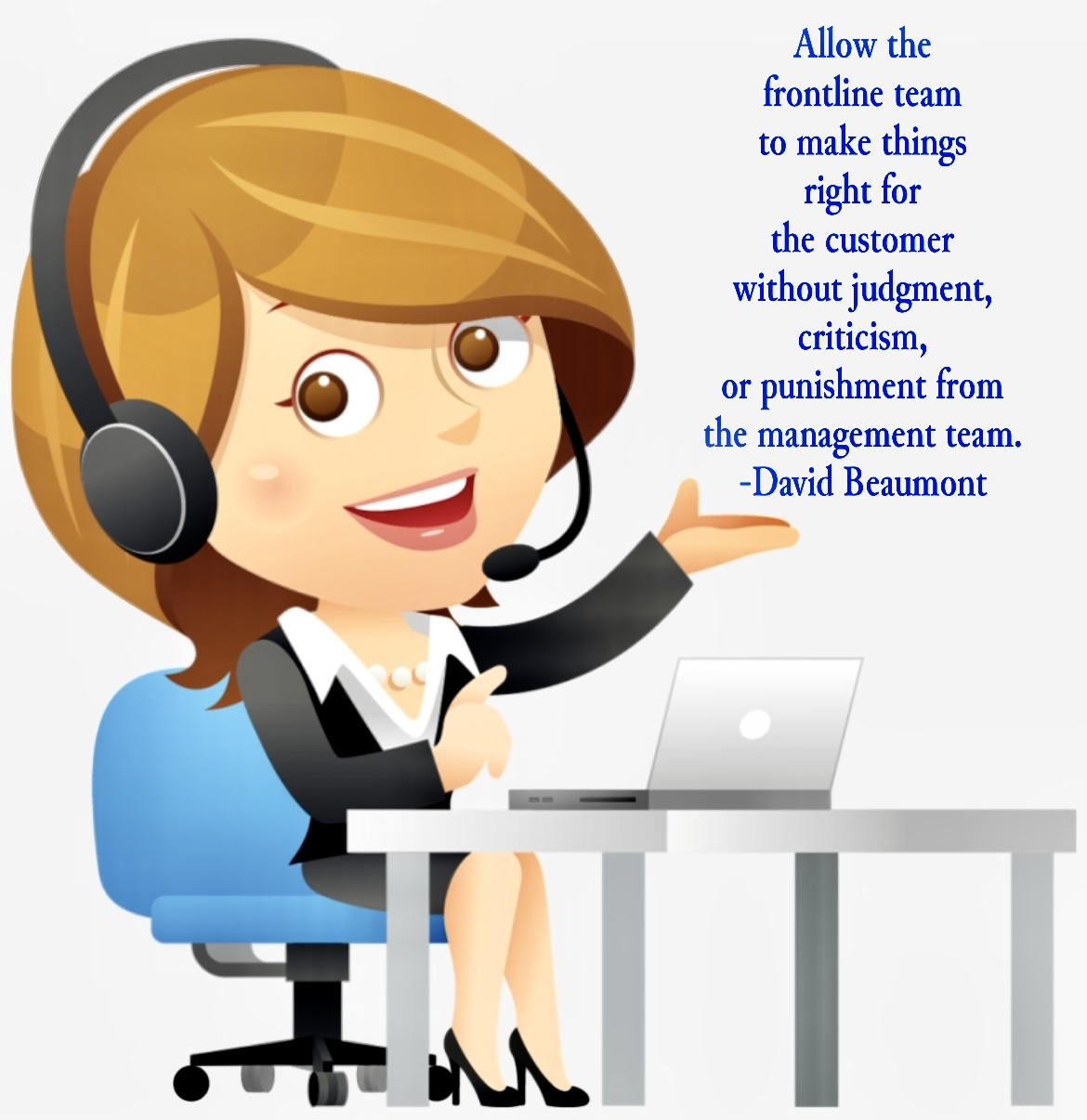
DAVID BEAUMONT: The front-line support needs to know that their leadership team has their best interest at the forefront. That means giving the front-line folks the proper tools to act on behalf of the customer. It means allowing the front-line team to make things right for the customer when it makes sense – without judgment, criticism, or punishment from the management team.

When you empower your team to know that they can get the customer back on the right track without a lot of friction during the process is when the front-line can feel secure in delivering exceptional support to the customer. That is when you begin to build customer happiness – because the front-line team is happy.

TWEET THIS: Allow the front-line team to make things right for the customer without punishment from the management team. ~@dbeaumont266 #CX #DebbieLaskeysBlog


QUESTION: Which social platform is the best tool for creating a quality customer experience, and why? If different, which platform is the most effective for addressing customer complaints or issues in a timely manner, and why?

DAVID BEAUMONT: I would have to say Twitter is a platform for creating a quality customer experience as well as voicing a complaint. Social media is a channel where people can share their true feelings about how products and services work or don't work for them. Twitter has more of the business element built in such that it is monitored more closely by staff to see what customers are saying about them.

QUESTION: What's your favorite customer service story?

DAVID BEAUMONT:
“A Target employee helps teen tie a tie and prep for a job interview”

I enjoyed this story because the team member showed his empathetic side. He may have walked in the young man’s shoes at one time and now is invested in making sure this young man makes a great impression. It also showed a caring and compassionate side, which, as customers, we want to see when we visit places of business. Also, by showing this act of kindness, this particular team member created a memorable moment that the young may will surely not forget.  

(Read this customer service story and more here: https://www.ringcentral.com/us/en/blog/great-customer-service-stories/)

QUESTION: What are your three favorite brands, and why?

DAVID BEAUMONT: Here are my three:

Barnes and Noble: While I am not a frequent visitor, the times I do go into Barnes and Noble, the staff does not disappoint. There is always someone walking around to see if you need help. The information center team members are very knowledgeable about suggesting the best kinds of books. If I say I am looking for books that are like the early days of Stephen King, they can give me a couple of suggestions. If a book is not available, they offer to order or alert me when the particular book of interest would be in the store. If I call in and they have a book for me, they will hold the book at their front counter, so I don’t have to search around the store looking. Barnes and Noble helps remove the friction, thus making the customer experience a pleasurable one.

Chick-fil-A: I have visited a few Chick-fil-A's, and the level of service is the same across the board. The people are always pleasant, and they greet you like they are happy that you have come to see them. I am also amazed at how fast they move the drive-thru line. It seems no matter how many cars are there, a slowdown does not happen. My wait time is always minimal.

Cove Security: With the ability to DIY (do-it-yourself) security systems, the process could be a little challenging. Cove's customer service is great. You may think emailing support is going to have your wheels spinning, but not with Cove. They are very responsive, and they give you answers that help you resolve your issues. Talking to them on the phone is the same way. The service is also affordable and customizable to fit your specific needs.

My thanks to David for sharing his customer experience insights and for appearing here on my Blog.

Check out David’s links:
Twitter: @dbeaumont266
Blog: http://customerserviceisreal.wordpress.com
LinkedIn: https://www.linkedin.com/in/davidbeaumont-blogger

Image Credit: pngkit.com.

Thursday, September 22, 2022

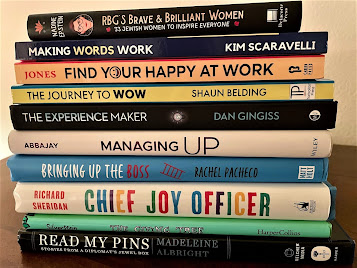
Fall Back to Reading with These 9 Thought-Provoking Books


Those of us with a passion for reading (and consider reading an essential part of life) often start the summer with a large pile of books. However, life's commitments intervene, and the pile of books sometimes seems just as high at the end of the summer as it was at the beginning. Today may be the first day of fall, but I completed all of the books in my pile during this past summer: 9 business books featuring memorable insights about leadership, marketing, and customer experiences. I highly recommend that you add them to your fall or winter reading list. A suggested Tweet (or a few) for each book is included at the end of each book's mini review.

BRINGING UP THE BOSS, Practical Lessons for New Managers by Rachel Pacheco
One of the nuggets in this book is the importance of feedback. To quote Pacheco, "To be a great manager, not only do you have to be great at giving feedback, but also, you have to be great at receiving effective feedback from your team." Effective feedback results in quality work. Feedback also leads to employees who feel productive, confident, motivated, fulfilled, and valued. These types of employees climb the corporate ladder and improve the business.

Another important aspect of leading involves a sense of purpose. Pacheco shared a story of a dog pulling a tire. You'll have to read the book for the full story, but suffice it say that the dog was happier when pulling a tire along the beach. Can you say that all your employees have a sense of purpose, and even more importantly, do they understand how their roles impact the entire organization's brand promise?

Lastly, as Pacheco wrote, "When you become a manager, there is a fundamental shift in how you approach your work, and there is a fundamental shift in how others think of you." As a leader, this is something to genuinely understand.

TWEET THIS: Often we are put into positions of management before we're actually ready. ~@rachelbpacheco #LeadershipTip #DebbieLaskeysBlog

TWEET THIS: We have the power to help someone grow, develop, and thrive; we also have the power to overburden, confuse, and wreak havoc. ~@rachelbpacheco #LeadershipTip #DebbieLaskeysBlog

TWEET THIS: What no one ever said: I wish my manager communicated LESS. ~@rachelbpacheco #LeadershipTip #DebbieLaskeysBlog

CHIEF JOY OFFICER, How Great Leaders Elevate Human Energy and Eliminate Fear by Richard Sheridan
Sheridan explained that he wanted to build a joyful company once he was promoted to VP of R&D for Interface Systems in 1997. He wrote, "I wanted to implement this joyful dream in an industry not exactly known for delighting customers or employees - software design...Let's get you to a place where you bound inside those doors (of the office) with enthusiasm and energy and share that with others as the leader. Where those on your team can become leaders in their own right because you've built a culture where leadership can thrive."

Sheridan provided a very good visual. He compared leaders to airplane pilots. "They are responsible for a lot, but they can't do their jobs safely entirely by themselves. They depend on help from others and are aided by systems that keep them as safe as possible while allowing them to get where they are going."

Another memorable visual that Sheridan shared was in a section he called "Own Your Mask." Here's the explanation. As part of a grief counseling session for teens experiencing the loss of family members or friends, they participated in an exercise to write on plastic white masks. On the outside, they wrote "I'm doing okay," "Thank you for asking about me," and similar thoughts. However, on the inside of the masks, feelings were raw, feelings that these teens did not want to share: "I'm lonely," "I'm sad," "I'm angry," and "Why me?"

This was an excellent lead-in to Sheridan's explanation of leaders and THEIR masks. On the outside, the masks may say "strong, confident, competent, ambitious, etc." However, for most leaders, the inside of the mask would look like this: "scared, worried, overwhelmed, stressed."

Sheridan also referenced one of the greatest books of all time, The Giving Tree by Shel Silverstein. If you haven't read it, add it to the top of your reading list immediately! I won't spoil the experience for you - I read it the first time in elementary school, and many times since.

TWEET THIS: Business has to give people enriching, rewarding lives, or it's not worth doing. ~@richardbranson via @tom_peters for @menloprez #DebbieLaskeysBlog

THE EXPERIENCE MAKER by Dan Gingiss
Dedicated "to anyone who has gone out of their way to help a customer," this is a playbook for organizations that strive to add a remarkable customer experience strategy to their day-to-day operations. As Gingiss explained at the outset, "When happy customers share their positive experiences with friends, family, and social media followers, it is far more powerful and persuasive than any brand campaign. But most of the time, companies are so focused on acquiring new customers that they forget to provide positive experiences to their existing customers. This makes things infinitely harder on the sales and marketing teams, which are constantly saddled with higher and higher acquisition goals each year while many existing customers are heading for the competition."

Some of the memorable customer experience stories that Gingiss shared were the IKEA ad for pregnant women, the romance writer who experienced her stories before publishing them, Target's easy-to-assemble media stand, the fresh approach to Instagram by the Musee d'Orsay in Paris, the Savannah Bananas baseball team antics, and the Crock-Pot storyline featured in the February 4, 2018, episode of the amazing TV series This Is Us.

TWEET THIS: One of the easiest ways to improve the #CX is to find the customer pain points and then alleviate them. ~@dgingiss #DebbieLaskeysBlog

TWEET THIS: A common recommendation in #CX is to walk in your customer's shoes. ~@dgingiss #DebbieLaskeysBlog

TWEET THIS: Every interaction a customer has with a brand is a customer experience opportunity. ~@dgingiss #CX #DebbieLaskeysBlog

TWEET THIS: When you go above and beyond to solve a customer's problem, they will love you even more - despite the fact that something went wrong. ~@dgingiss #CX #DebbieLaskeysBlog

MANAGING UP, How to Move Up, Win at Work, and Succeed with Any Type of Boss by Mary Abbajay
Abbajay began the book by explaining, "By learning how to effectively manage those who manage you, you put yourself in the driver's seat and take control of your career...Managing up is not about brownnosing, sucking up, or becoming a sycophant. Managing up is about consciously and deliberately developing and maintaining effective relationships with supervisors, bosses, and other people above you in the chain of command."

First, you need to determine if your boss is an introvert or an extrovert. Then, you need to assess your boss' workstyle personality as well as if he/she/they is a difficult boss, which can be the following according to Abbajay: micromanagers, ghosts, impulsives, narcissists, pushovers, best friends, workaholics, incompetents, seagulls and nitpickers, and truly terrible (psychos, tyrants, bullies). At the end, there is a cheat sheet of 50 ways to manage your manager.

TWEET THIS: We need to know how to manage those who manage us (which is itself a form of leadership). ~@maryabbajay #EmployeeExperience #DebbieLaskeysBlog

FIND YOUR HAPPY AT WORK, 50 Ways to Get Unstuck, Move Past Boredom, and Discover Fulfillment by Beverly E. Jones
Since research has shown that a large majority of people are disengaged at work, Jones shares ideas for re-engaging. She posed the idea that there are three keys to finding satisfaction at work, also known as the three points of the engagement triangle: purpose, people, and performance. She explained, "You can't flip a switch to make yourself feel more contented, but you can steadily, methodically cultivate happiness." Jones ended her book with a list of ten key takeaways for finding "your happy" at work.

PURPOSE: It's easier to love your job if you're working for something that matters more than just a paycheck.

PEOPLE: Your job can feel more satisfying because of your colleagues, your broader circle of clients and professional contacts, and other people you encounter in the course of your career.

PERFORMANCE: You're more likely to love your job if you invest effort in your tasks, build expertise and remain invested in your work, and exercise some autonomy.

TWEET THIS: Remember that you own your career. You can change your work life if you want to. ~@beverlyejones #DebbieLaskeysBlog

TWEET THIS: Having a passion for reading books can help you learn, make you happier, and stimulate your career. ~@beverlyejones #DebbieLaskeysBlog

NOTE: How's that Tweet in reference to my introductory paragraph???

THE JOURNEY TO WOW, The Path to Outstanding Customer Experience and Loyalty by Shaun Belding
As Dave Carroll, singer-songwriter and creator of United Breaks Guitars, explained, "The Journey to WOW was a treat to read. The topic of customer experience can sometimes be dry and formulaic, but Shaun understands that we are all storytellers and so the most effective way to convey important insights is through a well-written story. The difference between perfection and excellence; the importance of delivering consistently high service; being congruent in your brand and understanding that an outstanding customer journey is a never-ending process for the provider; all of those insights are woven tightly inside an engaging character-driven narrative. This book should be required reading for everyone if the customer experience space."

TWEET THIS: There is no end to the journey of creating an outstanding customer experience environment. ~@ShaunBelding #CX #DebbieLaskeysBlog

TWEET THIS: Your internal #CX is as important as your external #CX. ~@ShaunBelding #DebbieLaskeysBlog

TWEET THIS: Customer experience needs to be actively championed at the top. ~@ShaunBelding #CX #LeadershipTip #DebbieLaskeysBlog

MAKING WORDS WORK, A Practical Guide to Writing Powerful Content by Kim Scaravelli
Scaravelli wrote this book for copywriters, content writers, business owners who write content for themselves, folks who have personal projects on the go (like blogs or books), and business leaders who pay others for words. "Keep your notebook open while you read, and if a fire ignites, shift to a keyboard and begin actually writing something. Notebooks are for ideas, not content assembly. The online world is where your words will live, so that's where you should plant them."

Like me, Scaravelli is a fan of reading and believes, "Reading is how you come to appreciate and understand the art of writing." Her tips include: (1) start with an easy time commitment, say 20 minutes a day; (2) highlight phrases and passages that resonate with you; and (3) read hard copy books with paper pages.

According to Scaravelli, "Content that serves a clear purpose is more apt to thrive online." Therefore, content's primary purpose will fit into one of these three categories: (1) informing or educating; (2) entertaining; or (3) inspiring readers to do something.

Scaravelli shared a memorable story to illustrate her writing tip called, "Find Your Angle." In an art class, all students painted basically the same bowl of apples. However, during the class, there was constant shuffling noises of a chair being moved. It turned out that the sketch painted by the student who kept moving her chair had created an aerial view of the fruit bowl - completely unique and much more interesting. As Scaravelli advised, "Your job is not to reinvent the fruit bowl - it's to move the chair."

TWEET THIS: You can't use up creativity. The more you use, the more you have. ~Maya Angelou via @KimScaravelli #DebbieLaskeysBlog

TWEET THIS: Amateurs sit and wait for inspiration, the rest of us just get up and go to work. ~@StephenKing via @KimScaravelli #DebbieLaskeysBlog

TWEET THIS: The secret is to write like you're speaking to an audience of one. Talk to them as though you're seated beside them on the sofa. ~@KimScaravelli #DebbieLaskeysBlog

RBG'S BRAVE AND BRILLIANT WOMEN, 33 Jewish Women to Inspire Everyone by Nadine Epstein with introduction and selection by Ruth Bader Ginsburg
While written by journalist Nadine Epstein, the list of women included in this book were chosen by former Justice of the Supreme Court Ruth Bader Ginsburg during the final year of her amazing life. The women featured include Deborah, the first woman judge in the bible; Emma Lazarus, a poet whose words adorn the pedestal of the Statue of Liberty; Golda Meir, the first and only female prime minister of Israel; Anne Frank, whose diary during World War II became famous; and many more.

According to Epstein, "What (the women in this book) all have in common is that they transcended what was expected, allowed, or tolerated for a woman of their time. They chose difficult or unusual paths and stayed true to their talents and missions despite the obstacles. They achieved what was unimaginable, and the unimaginable led to the advancement of women, to breaking barriers in previously men-only fields, and to changing the world for the better."

TWEET THIS: RBG was determined that this book would be part of her legacy. ~@NadineEpsteinDC #RBG #DebbieLaskeysBlog

READ MY PINS, STORIES FROM A DIPLOMAT'S JEWEL BOX by Madeleine Albright

Written by former Secretary of State Madeleine Albright, this book is a combination of storytelling, history lessons, and images of wearable art from all over the world. Albright explained, “A foreign dignitary standing alongside me at a press conference would be happier to see a bright, shining sun attached to my jacket than a menacing wasp. I felt it worthwhile, moreover, to inject an element of humor and spice to the diplomatic routine. The world has had its share of power ties; the time seemed right for the mute elegance of pins with attitude.”

She explained, “As my pins became more expressive and drew more comments, I had cause to reflect on the relationship between appearance and identity. To what extent, to adopt the old saying, do pins make the woman or, for that matter, the man? After all, the display of pins has never been confined to one gender. Medieval knights wore elaborate jeweled badges that defined their status and conferred a group identity...George Washington sometimes wore a spectacular diamond eagle that included no fewer than 198 stones...Finally, our armed forces also use pins – in the form of ribbons and medals – to convey messages about accomplishments, stature, and rank.”

TWEET THIS: The world has had its share of power ties; the time seemed right for the mute elegance of pins with attitude. ~Madeleine Albright #ReadMyPins #DebbieLaskeysBlog

Before this post ends, I must mention 8 memorable works of fiction that I also read during the summer:
* Confessions on the 7:45 by Lisa Unger
* The Lies I Tell by Julie Clark
* The Pilot's Daughter by Audrey J. Cole
* 22 Seconds by James Patterson
* The Favor by Nora Murphy
* The Younger Wife by Sally Hepworth
* After the Wedding by Laura Elliot
* Movieland by Lee Goldberg

What did YOU read this summer, and what's on your reading list for the fall?

Image Credit: Debbie Laskey’s Library.

Thursday, July 21, 2022

Is Customer Experience Different Around the World?

Do you know what today is? If you guessed "Get to Know Your Customers Day," then you're correct. Designated as the third Thursday of the beginning of each quarter, it's an opportunity to leave your desk, office, or home office during the covid era - and get to know your customers.

To quote Matthew Kobach (@mkobach), "Twitter is a key that unlocks thousands of doors, some of which you never even knew existed." As a member of the Twitterverse for almost 13 years, I always enjoy meeting new people and learning from them. I recently connected with Michael Brandt and invited him to appear here on my Blog in a Q&A about customer experience marketing and management. Highlights of our conversation follow a brief introduction.

Based in Lugano, Switzerland, Michael Brandt is a Certified Customer Experience Professional (CCXP) with 25 years experience in B2B customer facing roles. He is also a founder Member of the European Customer Experience Organization (ECXO). His main focus areas are Voice of the Customer and Loop Closing, Complaint Management, and Customer Journey Mapping.

QUESTION: Those of us who live in the marketing and customer experience worlds have heard the Jeff Bezos empty chair story many times, whereby an empty chair represents the customer in all meetings. What does this story mean to you?

(Read the post: https://www.inc.com/john-koetsier/why-every-amazon-meeting-has-at-least-one-empty-chair.html)

MICHAEL BRANDT: I think the Jeff Bezos empty chair story is mentioned at most of the CX events that I have attended! For me, it basically means that in every decision that a company makes, at whatever level, you need to take the customer’s interests into account. To be honest, in a company in which the culture is already that way inclined, the physical customer chair should not be necessary.

For some years I worked with a company in the USA, Baldor Electric, after they became part of the ABB Group. Their mission statement started, “To be the best (as determined by our customers)” and it was lived throughout the company. Each meeting started with a recitation of the short company mission statement. A survey done by an HR company showed that well over half of the company staff felt that “customer happiness” was at the top of the company’s priorities, and they identified with that. It was also very visible when dealing with this company that this was strongly reflected in the company culture and work ethic.

TWEET THIS: In every decision that a company makes, at whatever level, you need to take the customer’s interests into account. ~@CxExcellence #CX #DebbieLaskeysBlog


QUESTION: Since March 2020, which brands have stood out by providing excellent customer service during the covid pandemic?
MICHAEL BRANDT: That is a difficult question to answer. I think that local brands in many countries have faced the challenge that the covid pandemic represented head on and have come out of it much stronger. Many of the global brands that I deal with have attempted to plaster over the cracks and make the best of a bad job, which is not the same as doing a great job.

It cannot be that two years after the start of the pandemic, organizations are still asking customers for patience, using covid as an excuse for slower or more inefficient service. They have had the time to redirect resources and adjust processes but, in many cases, just haven’t done so.

One great example of a company that did react well was, in my opinion, Česká spořitelna, a Czech bank. When the covid vaccination programme got under way, they realised that older customers were having difficulty managing the technology required to make appointments. Their contact center was tasked with assisting older customers in making the necessary appointments. I think this is a brilliant example of a company that used its resources for the benefit of the community. This is worth mentioning in an age in which so few companies have a social conscience.

QUESTION: What customer experience metric should every brand use, and why?
MICHAEL BRANDT: If you use Google to research customer related metrics, you get titles with “The XX customer metrics you need to measure.” Replace XX with any number between 5 and 20! And to be honest, that is nonsense. Nowadays, customer surveys are so flawed (design and execution), that, in most cases, they should not be relied upon to place big business bets. Also, track too many metrics and you end up with data paralysis, not knowing what to act on first.

You really need to be looking at customer behaviour: how they actually behave as opposed to how they tell you they will behave. Look at your churn rate and renewals. If people are leaving your brand, find out why. Do a detailed analysis and work on correcting the issues. If you are a company that has the resources to carry out strong data analytics, start becoming proactive. Ascertain what the signs of vulnerable customers are and act accordingly. And most importantly, don’t stop listening to your customers, whether it is through surveys, through the contact center, through social media, through complaints, or through whatever channel your customers may use.

TWEET THIS: If people are leaving your brand, find out why. ~@CxExcellence #CX #BrandExperience #DebbieLaskeysBlog


TWEET THIS: Don’t stop listening to your customers. ~@CxExcellence #CX #BrandExperience #DebbieLaskeysBlog


QUESTION: Which three customer experience books should every marketer read, and why?
MICHAEL BRANDT: For the person starting out on their CX journey, I would go with Ian Golding’s “Customer what?” I think that it gives a great overview of CX without becoming too complex. It’s a great book with which to get a solid CX foundation to build on.

For the more experienced practitioner, I would go with Jeff Sheehan’s “Customer Experience Management Field Manual: The Guide For Building Your Top Performing CX Program.” It’s like having a Swiss army knife on your desk. It has most of the answers that you will need when practising CX and is a great reference book, giving you most of the facts that you will need at your fingertips.

Finally, to round things off, I would go with the latest book by Annette Franz: “Built to Win: Designing a Customer-Centric Culture that Drives Value for Your Business," but her earlier book: “Customer Understanding: Three Ways to Put the "Customer in Customer Experience (and at the Heart of Your Business)” is also worth reading.

QUESTION: To quote Marilyn Suttle (@marilynsuttle on Twitter), "The secret to providing exemplary customer service is making it the priority and part of every employee’s job description." Sounds easy on paper, but difficult in execution. How do you execute this?
MICHAEL BRANDT: It isn’t actually that difficult, and I don’t agree that it is something that needs to be in every employee’s job description. It’s a question of culture and example set by senior executives. If senior management shows that exemplary customer service is important to them, it will filter down the rank. But they have to walk the talk and lead by example. No exceptions. I’ll go full circle, back to the example in the first question of Baldor Electric. Staff there know that Customer Happiness was a priority to the company because senior management not only said it was, but they also acted like it was. Employees will follow the lead set by their managers. It really is that simple.

QUESTION: Similar to the stories I shared in a blog post about amazing customer experiences (link is below), what’s your favorite customer experience story, and why?

(Read the post: https://www.debbielaskeysblog.com/2018/04/want-your-brand-to-soar-above.html)

MICHAEL BRANDT: It happened during my time in Japan. I spent seven years in Yokohama with my family from 2000 to 2007. At some point, we had purchased a foot spa. It wasn’t a particularly wise purchase because our feet were probably far bigger than the norm in the local market. Anyway, it found its way into a cupboard where it remained for a few years until we started cleaning out. Disposing of electrical equipment was fairly expensive, so we took it back to the store to ask them to dispose of it. We certainly were not expecting any kind of refund.

The store assistant called a manager, who asked us whether we had a receipt. I said that we hadn’t, but that we really only wanted them to dispose of it. After 5 minutes working his computer, he shocked us by giving us a full refund! He explained that it didn’t really matter that the foot spa was no longer under warranty, it was inconceivable to him that we had purchased something from his store that we were not satisfied with. My wife and I were left speechless. We were used to the “rolling eyes” that we would generally get in stores back home. This experience was on a completely different level.

The whole customer-centric culture in Japan was what really got me hooked on Customer Experience. That was only one example, but there were several others that I could have also listed. There were any number of things that they could have used to turn us away empty-handed, not least the language difficulty. But it just never happened. These experiences, in my opinion, just would not have happened with the same frequency in Europe or North America. Or at least, not without serious effort on the customer’s part. I’m sure that it does happen sometime, somewhere, but it is more the exception than the rule.

My thanks to Michael for sharing his customer experience insights and for appearing here on my Blog.

Image Credit: 123rf.

Visit Michael's links:
Website: www.cx-excellence.com
Linkedin: www.linkedin.com/in/michael-brandt-ccxp-9512a33
Twitter: www.twitter.com/cxexcellence
Instagram: www.instagram.com/Brandt_CX

Monday, May 23, 2022

The Alignment Between #EmployeeExperience and #CustomerExperience

To quote Matthew Kobach (@mkobach), "Twitter is a key that unlocks thousands of doors, some of which you never even knew existed." As a member of the Twitterverse for nearly 13 years, I always enjoy meeting new people and learning from them. I recently connected with Dennis Geelen from Peterborough, Ontario, Canada, and invited him to appear here on my Blog in a Q&A format. Highlights of our conversation follow a brief introduction.

Dennis Geelen is a customer-centricity and innovation author, speaker, and consultant. He is the founder of Zero In, a consulting company that helps businesses build a more customer-centric and innovative culture and author of the book The Zero In Formula: The Ultimate Guide to Building a Disruptive and Sustainable Business through Customer-Centric Innovation. Connect on LinkedIn (https://www.linkedin.com/in/dennis-geelen-5a95703) and on Twitter @dennis_geelen.

QUESTION: In a post you wrote on Entrepreneur entitled, "How to Get Customers and Employees Excited About Your Business," you provided some key take-aways. Can you briefly share them?
DENNIS GEELEN: The main theme of the article is that all businesses need to be focused on solving indifference in BOTH their customers and their employees. They should be focusing on building a brand that customers crave and a company that people are passionate to work for. This is the key to long-term success.

In the article, I shared seven different strategies to help you get there:
(1) Exclusivity: Start by targeting a specific group or people or a specific need (Think Amazon and how they started with selling ONLY books online)
(2) Company Message/Purpose: Having a message or purpose that your customers and employees resonate with (Think Tom’s Shoes)
(3) Business Model: Perhaps the way that you provide your product or service is what separates you from your competitors (think Dollar Shave Club or AirBnB)
(4) Product/Service: Delivering a very unique or high quality product or service (think Dyson)
(5) Customer Experience: Building an experience that is meant to resonate with and WOW your ideal customer (think Starbucks or Disney)
(6) Practices and Processes: The way that you operate is unique and better in a way that benefits both your customers and employees (think Amazon or Google)
(7) Employee Culture: Having the right incentives and rewards in place that motivate the specific behaviors that you want to build your culture around (think Zappos)

(Here's the article's link: https://www.entrepreneur.com/article/403617)

QUESTION: Dennis Snow (@DennisSnow on Twitter) wrote, "A customer-focused culture is one in which everything is designed with the “lens of the customer” in mind." What does this quote mean to you?
DENNIS GEELEN: I love this quote and completely agree. Centuries ago, humans believed that Earth was the center of the universe with the sun, moon, and all the other planets revolving around it. Only to discover this was not the case at all. The sun is at the center, and all the other planets (including Earth) revolve around it.

I believe the many business have similar incorrect thinking. They place their company, their products, and their services at the center, and all of their customer strategies (marketing, sales, CX, etc.) revolve around this inner focus. Whether you want to call it product focused, or inner focused, they have it wrong.

The CUSTOMER needs to be at the CENTER of everything you do and everything else needs to revolve around them. Understanding your customer, what their needs are, and why they do what they do (or don’t!) needs to be what drives your business.

TWEET THIS: The CUSTOMER needs to be at the CENTER of everything you do and everything else needs to revolve around them. ~@dennis_geelen #DebbieLaskeysBlog


QUESTION: Those of us who live in the marketing and customer experience worlds have heard the Jeff Bezos empty chair story many times. What does this mean to you?
DENNIS GEELEN: It is so easy to “forget” about putting your customer and their needs first when you are in internal company strategy meetings. I love how Amazon created a physical reminder that the customer and their needs should always have a seat at the table in every decision they make.

Another way that I have seen this done effectively is to start a meeting with a story or two about some real life recent customer experiences with your brand (good or bad). Starting from a point of empathy with your customers is a powerful way to start a meeting and get everyone in the customer-first mindset. Maybe that is why Design Thinking is such a popular and effective approach to innovation, it starts with empathy.

(To read more about the Jeff Bezos empty chair, check out this article: https://www.inc.com/john-koetsier/why-every-amazon-meeting-has-at-least-one-empty-chair.html)

(To read more about Design Thinking, check out this article: https://www.ama.org/marketing-news/the-5-phases-of-design-thinking/)

QUESTION: Since the covid pandemic began to impact everyone's lives in March 2020, which brands have stood out to you by providing excellent customer service?
DENNIS GEELEN: Again, I will go back to the point of empathy here. The pandemic has been a traumatic time impacting so many different people in so many different ways. Some companies get this, and some don’t (or don’t show it, at least).

Zappos is a great example of a company that gets it. They understood the need that people were having for human connection and opened a hotline to chat with customers. Zappos gets it.

Then there are stories of companies that have gone over and above to do something for their customers during these trying times. Restaurants delivered home cooked meals, grocery stores had special times set aside for the elderly to shop exclusively in a less busy environment, etc.

But I would like to highlight a business in my local area here in Ontario: Fresh Fuell. Owned by Louis and Leanna Segura, they have gone out of their way to build relationships, goodwill, and an amazing customer experience. They actually expanded their business during the pandemic. They have loads of loyal customers due to their empathetic and community-first mindset that, when times got tough, they still had the full support of their patrons.

QUESTION: Microsoft co-founder Bill Gates has said, "Your most unhappy customers are your greatest source of learning." How can all brands apply this timeless advice?
DENNIS GEELEN: Too many times, we seek to discredit or make excuses for critical or negative feedback from customers. I think it is human nature. We get defensive or want to deny or lay the blame elsewhere. But to Gates' point, we need to learn to get past this and seek to understand the situation more clearly. What caused frustration or anger with this unhappy customer? How could we have handled the situation differently or better? What improvements can we implement to prevent another situation like this in the future? Until we get to the point of being open and looking inside our businesses and ourselves with the objective to learn, grow, and improve, we will be sitting on a goldmine of information that is left untapped if we continue to ignore it.

The best way to handle unhappy customers is with a mindset that what they have to tell you is going to help your business provide a better experience for other customers in some shape or form.

TWEET THIS: What unhappy customers tell you will help your business provide a better experience for other customers. ~@dennis_geelen #DebbieLaskeysBlog


QUESTION: What three customer experience books should everyone read, and why?
DENNIS GEELEN: Great question. To answer this effectively, I think we need to categorize this first. To truly understand why customer experience is so important, you need to first understand the experience economy. For this, the book ‘The Experience Economy’ by Joe Pine and James Gilmour is the gold standard. For me, they are the godfathers of CX, and their book is where all business leaders need to start in order to get a solid foundation.

Next, you need to have a principle for understanding your customers better. You can’t design and deliver a great CX without understanding your customers. For me, that principle is Customer Jobs Theory, or Jobs to be Done (JTBD) as it is known. There are many terrific books on this subject, but my favourite has to be ‘The Secret Lives of Customers’ by David Scott Duncan. I love this book because Duncan takes the original JTBD thinking from the book ‘Competing Against Luck’ that he helped to co-author with the late Clay Christensen and expands through a wonderfully told parable full of interesting characters and lots of insights for better understanding your customers and why they choose your product or service.

Lastly, once you understand the experience economy, and you have a good grasp on your customers and why they purchase your product or service, you then need some strategies for how to deliver a great customer experience. Again, there are many great books to help you with this. Shep Hyken has written many, with ‘I’ll be Back’ being his latest. Dan Gingiss recently published ‘The Experience Maker’ as well, another great book. But my favorite book as a guide for delivering great CX would be ‘The Ten Principles Behind Great Customer Experiences’ by Matt Watkinson. Maybe I am biased because Matt and I have chatted a few different times about CX and writing, but I love this book because of Matt’s insightful yet concise writing style. He does a terrific job of bringing the reader in with captivating info and stories that keep you turning the page until, before you know it, you have finished the book and you have an MBA in CX!

My thanks to Dennis for sharing his inspiring employee and customer experience insights and for appearing here on my Blog.

Image Credit: Debbie Laskey.

Monday, November 8, 2021

The Importance of Brand Identity

Over the last 12 years, thanks to social media, I have had the privilege to meet a variety of amazing marketing, leadership, and customer experience experts. One of these experts is Susan Friesen from British Columbia, Canada. We recently had a discussion about marketing, and highlights follow below Susan’s bio.

Susan Friesen is the founder of eVision Media. In her capacity in that role, she recognizes that many business owners waste too much valuable time, money, and energy either hiring the wrong people to do their website and online marketing or trying to do it all themselves...and getting nowhere as a result. When working with clients, she has a proven, personalized, multi-pronged strategy that covers all of the critical aspects that must be done correctly to avoid these costly lessons. Susan can be found online at https://www.eVisionMedia.ca; on Instagram at https://www.instagram.com/susan.evisionmedia; on Facebook at https://www.facebook.com/eVisionMedia; and on Twitter @eVisionMedia.

QUESTION: In one of your Blog posts, you wrote about brand identity. What do you consider the five most important elements when creating a strong brand identity?

(Read the post here:
https://ezinearticles.com/?Is-Your-Business-Brand-Identity-Memorable-Enough?&id=10433533)

SUSAN FRIESEN: Creating a strong brand identity must first start with understanding and defining what your unique brand identity should be. Without that clarity, it's hard to be consistent with your brand presence and attract your ideal target market.

To help create your unique identity, begin with understanding your ideal target audience. You want to make sure your brand resonates with them.

Next is to get clear on what kind of value you bring to the table. This value will help convince your target audience to spend money on what you are offering.

Then you want to get clear on who your competitors are. Knowing the choices your ideal target audience have helps you better understand what they are facing when determining who to spend their money on.

And to help you be their obvious choice, the next step is to define your USP, your Unique Selling Proposition. That clarity will help you position your brand in a way that is the obvious choice between you and your competitors.

And lastly, develop a brand "voice" where everything said, written, and created should emulate your brand identity.

TWEET THIS: Develop a brand "voice" where everything said, written, and created should emulate your brand identity. -@eVisionMedia #BrandTip #BrandExperience #DebbieLaskeysBlog

QUESTION: In one of your Blog posts, you wrote about calls to action. Why is a CTA so important in marketing materials, email marketing, and on social media?

(Read the post here: https://evisionmedia.ca/secret-to-leads-sales-your-cta/)

SUSAN FRIESEN: In the world of marketing, sometimes we need to get right back to the basics. And when it comes to a call to action, those basics are to tell people what they should do next. What may be obvious to you, is most likely not obvious to them. So we need to lead them to the next step by offering them a prompt on what action they can take. Whether it's to make a purchase, sign up for a free giveaway for lead generation, or schedule an appointment, we need to plant the seed so they will act on the suggestion if they're ready to move forward.

QUESTION: Since March 2020, which brands have stood out by providing excellent customer service during the covid pandemic?
SUSAN FRIESEN:I'm a big proponent of supporting small businesses, so instead of sharing my thoughts on big brands and how they dealt with the pandemic, these businesses were just as impressive:

(1) The Broken Whisk restaurant in Agassiz, BC (https://thebrokenwhisk.com/) went above and beyond in response to their forced shut down. Instead of going home and waiting things out, they knew they needed to serve their clients who still had to eat but were also facing financial challenges. They created a select menu of gourmet meals and sold them for only $5. The orders were taken in advance and picked up on a specific day of the week.

(2) A local grocery store, Save-on-Foods (https://www.saveonfoods.com/), ramped up their home delivery services in a big way. Not only did they adhere to all safety precautions during the pandemic, they also provided a valuable service for those who couldn't (or wouldn’t) leave their house. The drivers we had were kind, courteous, and got to know us as a customer, which was greatly appreciated.

(3) Malary's Fashion in Cloverdale BC (https://malarys.com/) knew her customers would be wary of going clothes shopping but also didn't want to order online, so store owner Yvonne Hogenes created a personalized shopping experience where customers could book an appointment and have the store to themselves while experiencing individual attention for their needs.

I could go on as there are plenty of examples of businesses that stepped up to the plate and went above and beyond to serve their customers in a safe and compassionate way. We at eVision Media offered our clients interest-free extended payment plans to help get them through the crisis but still be able get their online presence updated to accommodate the rush for online sales.

QUESTION: What's your favorite brand, and why?
SUSAN FRIESEN: It's tough to specify just one brand, but I am quite loyal to a Canadian brand, The Bay. They are Canada's oldest brand and continue to grow and evolve to best meet their customer's needs. They always have exactly what I need at affordable prices with exceptional customer service, and you can't go wrong with that!

(Check out The Bay at https://www.thebay.com.)

QUESTION: Many people remember the famous OREO tweet during the 2013 Super Bowl. With that in mind, what's your favorite social media marketing campaign?
SUSAN FRIESEN: Dove has been doing an amazing job in their real beauty body image ad campaigns, and I came across one earlier this year where they put a focus on how selfie edits are done to highlight the dangers of social media.

(Watch it online at: https://www.youtube.com/watch?v=z2T-Rh838GA.)

QUESTION: What do you think will be the central focus of our marketing discussions a year from now?
SUSAN FRIESEN: I hope it's to continue to focus on the empathetic marketing model. More than ever, consumers are wanting to be heard and understood and not be "sold" at. The more businesses can embrace the model of compassion, kindness, understanding and giving, the better this world will be.

TWEET THIS: More than ever, consumers are wanting to be heard and understood and not be "sold" at. -@eVisionMedia #BrandTip #CX #DebbieLaskeysBlog

My thanks to Susan for sharing her marketing insights and for appearing here on my Blog.

Image Credit: Wordswag app.

Monday, October 4, 2021

The Alignment Between Customer Experiences and Marketing

Over the last decade, thanks to social media, I have had the privilege of meeting a myriad of amazing marketing, branding, customer experience, leadership, and social media experts. One of these experts is Dan Gingiss from Chicago. We recently discussed customer experience marketing, and highlights follow Dan’s bio.

Dan Gingiss is an international keynote speaker and customer experience coach who believes that a remarkable customer experience can be your best marketing. His 20-year professional career has consistently focused on delighting customers, spanning multiple disciplines including customer experience, marketing, social media, and customer service at companies such as McDonald’s, Discover and Humana. Dan is the author of two books, The Experience Maker: How To Create Remarkable Experiences That Your Customers Can’t Wait To Share (released in September) and Winning at Social Customer Care: How Top Brands Create Engaging Experiences on Social Media. He also hosts the Experience This! podcast and The Experience Maker Show, and was a regular contributor to Forbes. Check out his website at www.dangingiss.com, and follow on Twitter at @dgingiss.

QUESTION: Your website features this quote: "A Remarkable Customer Experience Is Your Best Marketing." How can a brand accomplish this on a consistent basis?
DAN GINGISS: When we create positive experiences for our customers, they naturally want to tell other people about them. This is because most of the experiences that we have with brands are average at best, and no one talks about average. The good news is that it's not very hard to differentiate your brand based on customer experience. It simply requires looking at every interaction your customers have with the company, and focusing as much time (and money) on your existing customers as you do on acquiring new ones.

QUESTION: Those of us who live in the marketing and customer experience worlds have heard the Jeff Bezos empty chair story many times. What does this mean to you?

(Check out the story here: https://www.inc.com/john-koetsier/why-every-amazon-meeting-has-at-least-one-empty-chair.html)
 
DAN GINGISS: One of the best compliments I received in my professional career was from the chief digital officer of Discover when he recruited me to head up digital customer experience. He said that he had observed me in meetings and that I always had the proverbial customer hat on. I always looked at business problems from a customer perspective. That insight actually changed my entire career path.
 
The empty chair tactic is great, as are the chairs that literally say “Customer” in Comcast's conference rooms and executive offices. But these become unnecessary when every employee realizes that they have a direct or indirect impact on the customer experience and must think through decisions and implementations with the customer in mind.

QUESTION: Since March 2020, which brands have stood out by providing excellent customer service during the covid pandemic?

DAN GINGISS: Charles Schwab impressed me early on in the pandemic by identifying my brokerage-specific needs (help navigating through a volatile stock market) versus the standard “enhanced cleaning procedures.” Once grocery stores and retailers figured out curbside pickup, that became a convenient enhancement that I believe is here to stay post-pandemic. Medical and dental practices did a great job of reinventing the patient experience as well.
 
QUESTION: What customer experience metric should every brand use, and why?
DAN GINGISS: Customer retention. Most companies have what I like to call a “leaky bucket,” whereby customers are leaving without even saying why. And usually, they’re headed for the competition. The leaky bucket is extraordinarily expensive, since we all know it costs much more to acquire a new customer than to keep an existing one.

On the flip side, the more customers we can keep, the more revenue we generate both from them and from their referrals. Customer retention is also a great complement to traditional CX measurements like Net Promoter Score because while the latter tells us what the customer says, the former tracks what they actually do.
 
QUESTION: To quote Marilyn Suttle (@marilynsuttle on Twitter), "The secret to providing exemplary customer service is making it the priority and part of every employee’s job description." Sounds easy on paper, but difficult in execution. How do you execute this?
DAN GINGISS: I’d probably substitute “customer experience” here for “customer service” only because service is a tactical component of CX that not everyone is qualified to provide. But every employee should look at themselves as contributing to the customer experience in some way, and therefore looking for ways to improve that experience by making it simpler, faster, or more convenient. For example, someone in the billing department may never actually talk to a customer, but they should still be looking for ways to make payments easier. After all, why would we want to stand in the way of a customer paying us?!

TWEET THIS: Every employee should look at themselves as contributing to the customer experience in some way. ~@dgingiss #EmployeeExperience #CX #BrandExperience #DebbieLaskeysBlog


QUESTION: What's your favorite customer experience story?
DAN GINGISS: Well, I make a living as a customer experience storyteller so it’s hard to pick just one favorite! But I’ll choose one from my new book, The Experience Maker: How to Create Remarkable Experiences that Your Customers Can’t Wait to Share:
 
If you’re like me and travel a lot for work, that means you also stay in a lot of hotels. There’s a dirty little secret about frequent travelers that most of us don’t want to admit: Sometimes we wake up in the middle of the night with absolutely no idea where we are.

“Am I in my bedroom? No, it’s a hotel, but wait...which hotel is it again? Where is the bathroom? And why is it so dark?”

Even if you don’t travel frequently, waking up at night in a strange place can be quite disorienting.

At one hotel I stayed at (naturally, I can’t remember which one), I woke up in the middle of the night to go to the bathroom. As soon as my feet hit the floor, a motion-activated light turned on from the bottom of the nightstand. It lit the path to the bathroom! Brilliant.

Now, being the customer experience guy that I am, I got down on my hands and knees and examined the light. It surprised me to find that it was a small stick-on light that probably costs fifty cents at Home Depot. Clearly it was not expensive, but it completely changed the experience of getting up in the middle of the night in a dark hotel. That counts as extraordinary in my book. (Literally.)


My gratitude to Dan for appearing on my Blog and for sharing his inspiring customer experience marketing insights.

Image Credit: Debbie Laskey.